
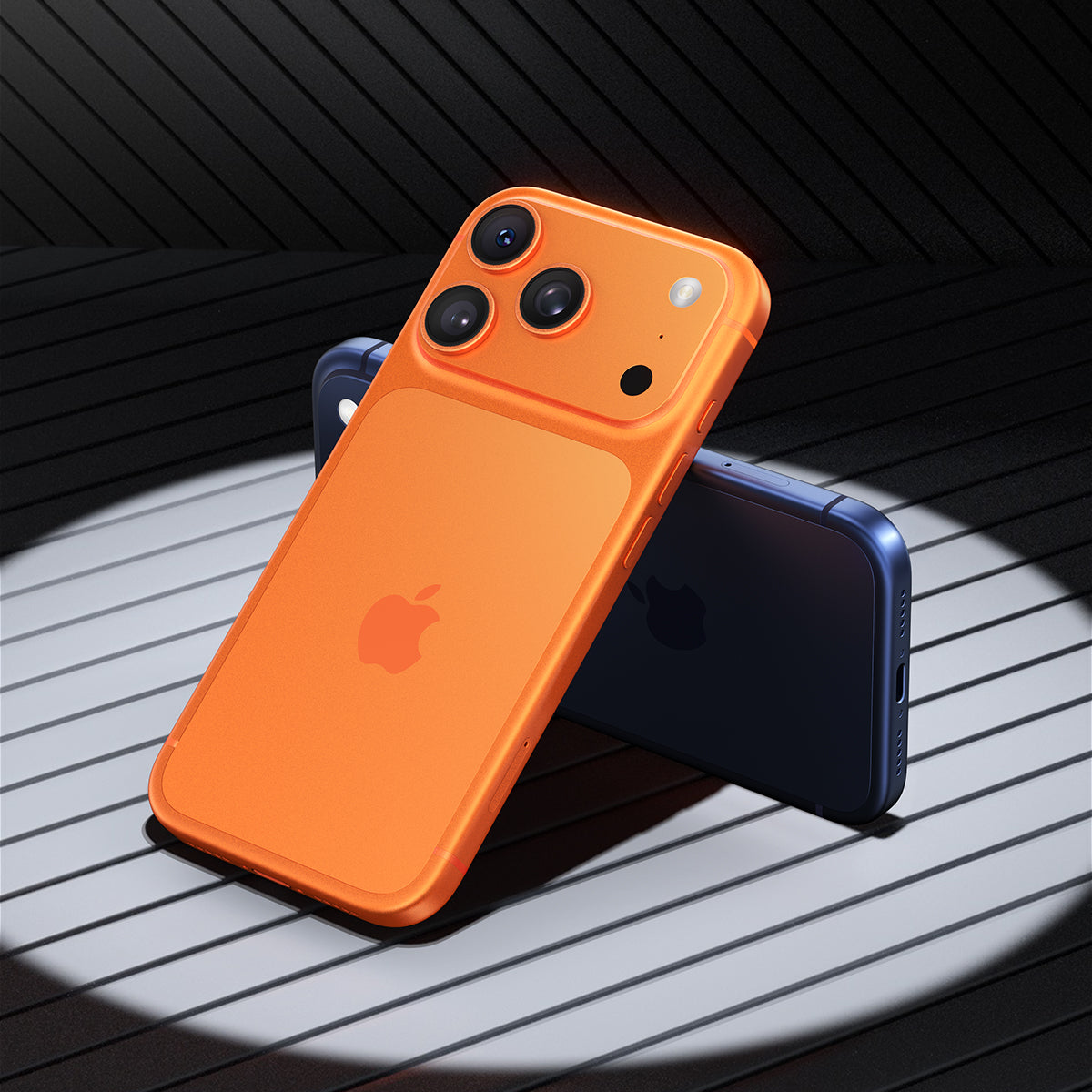
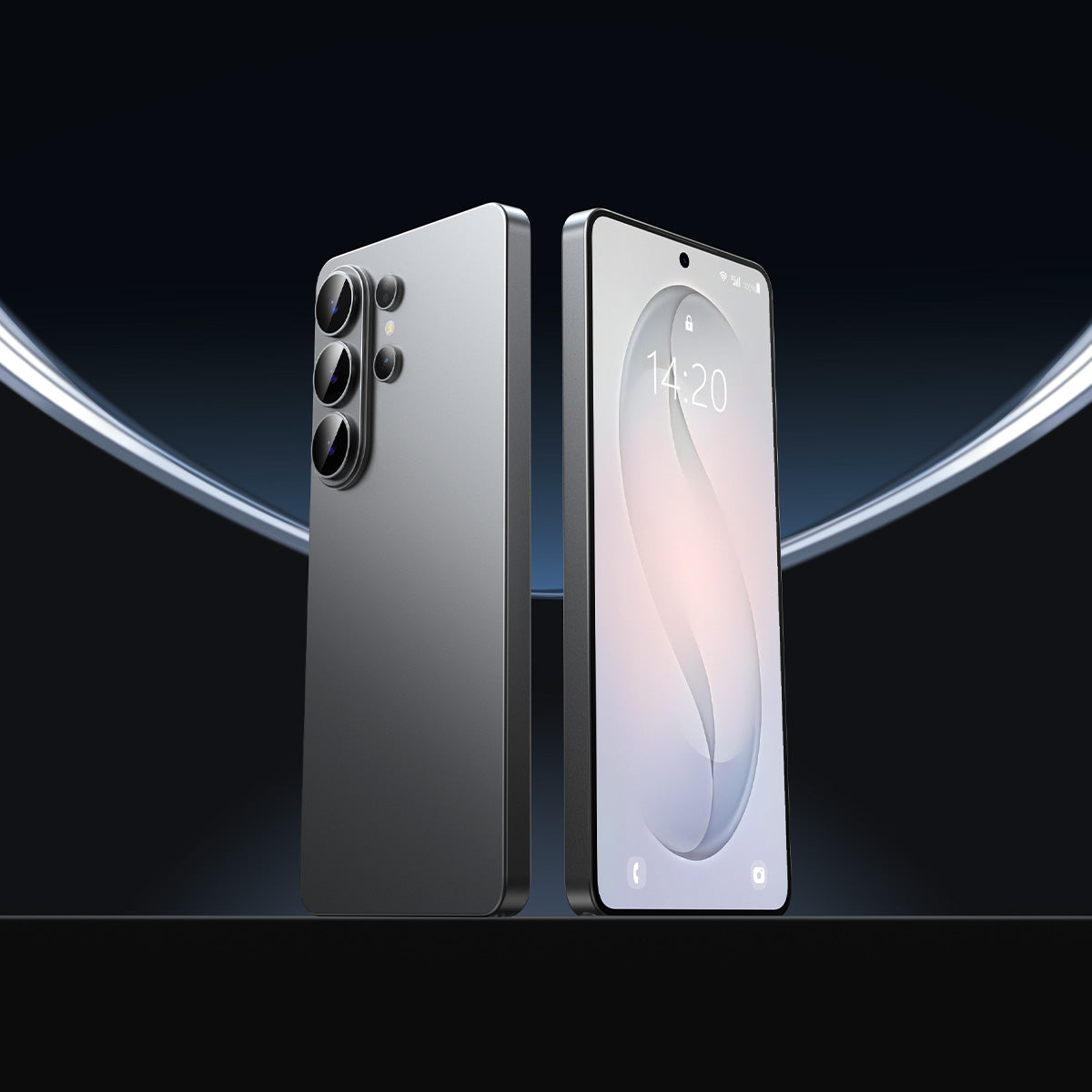

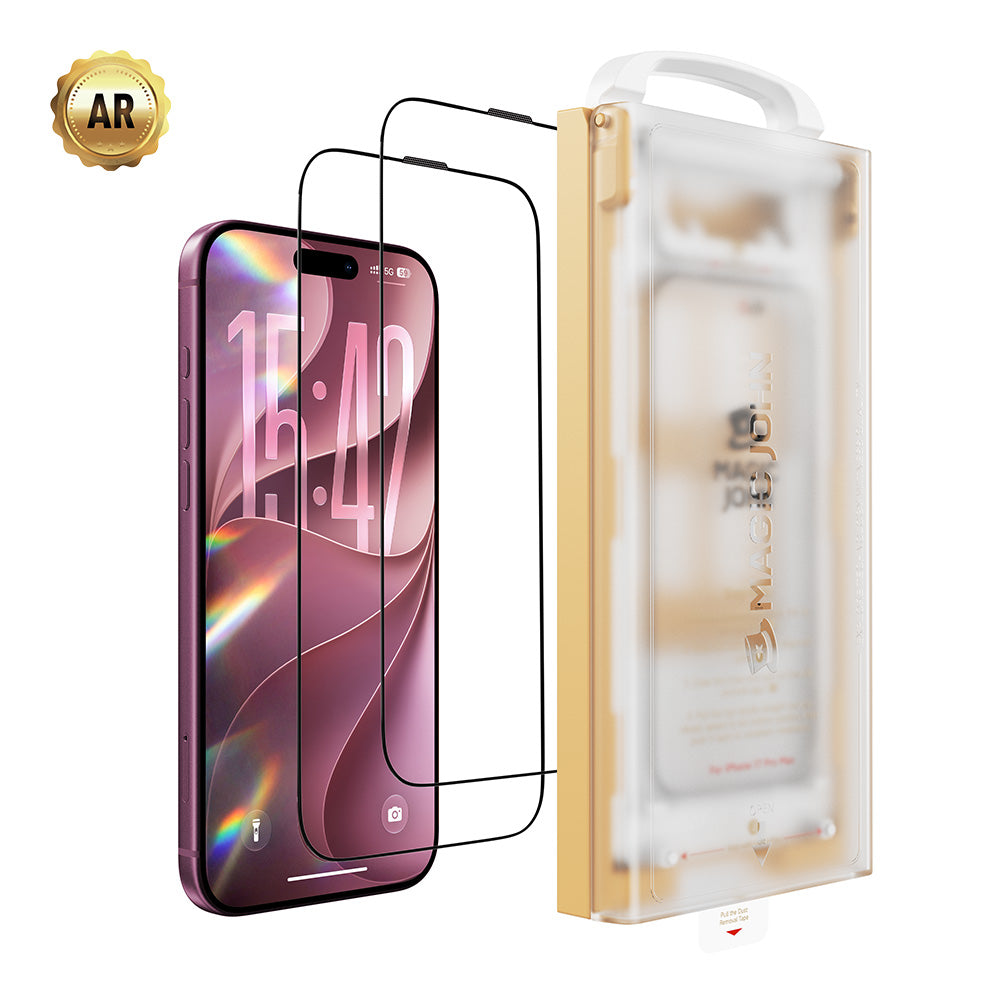
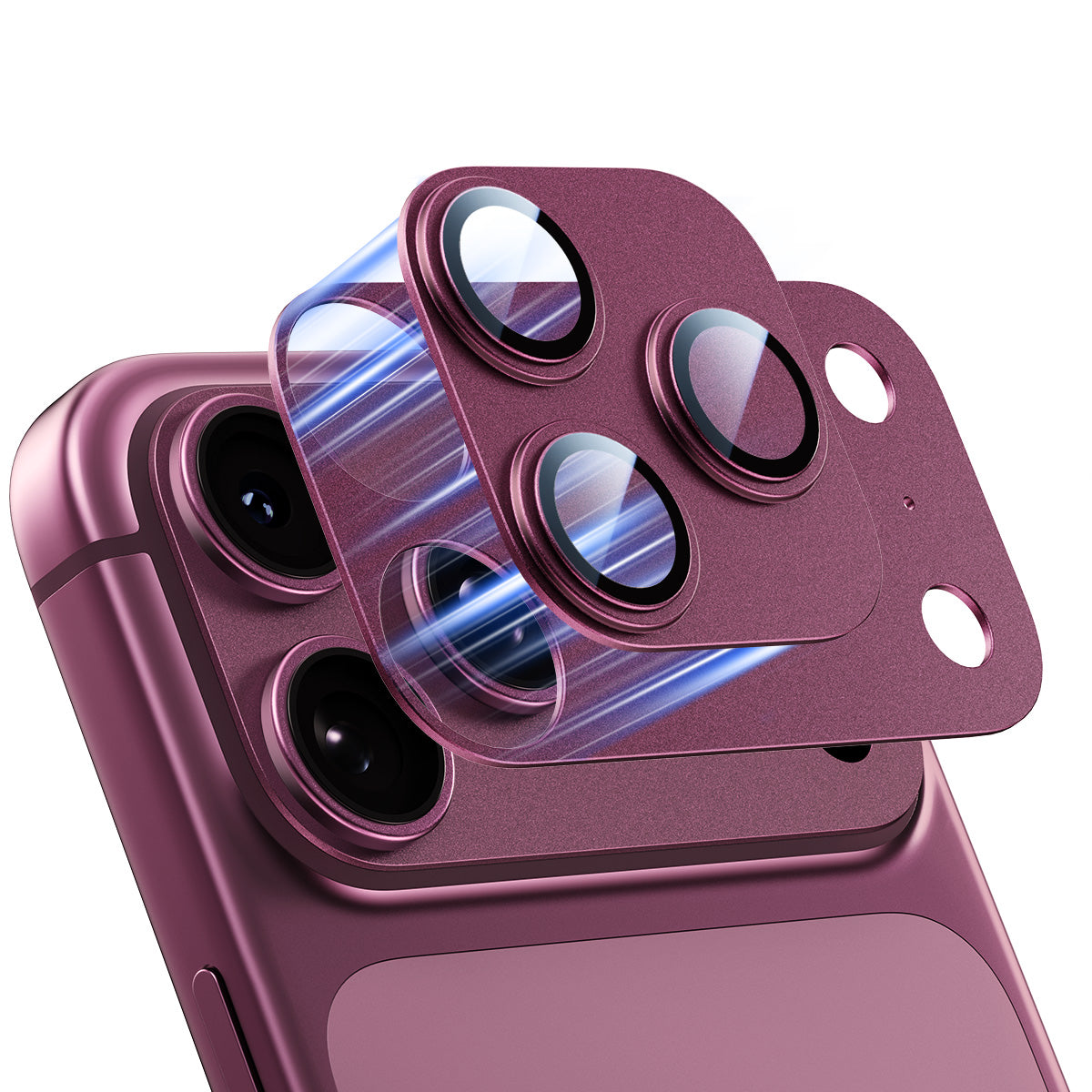
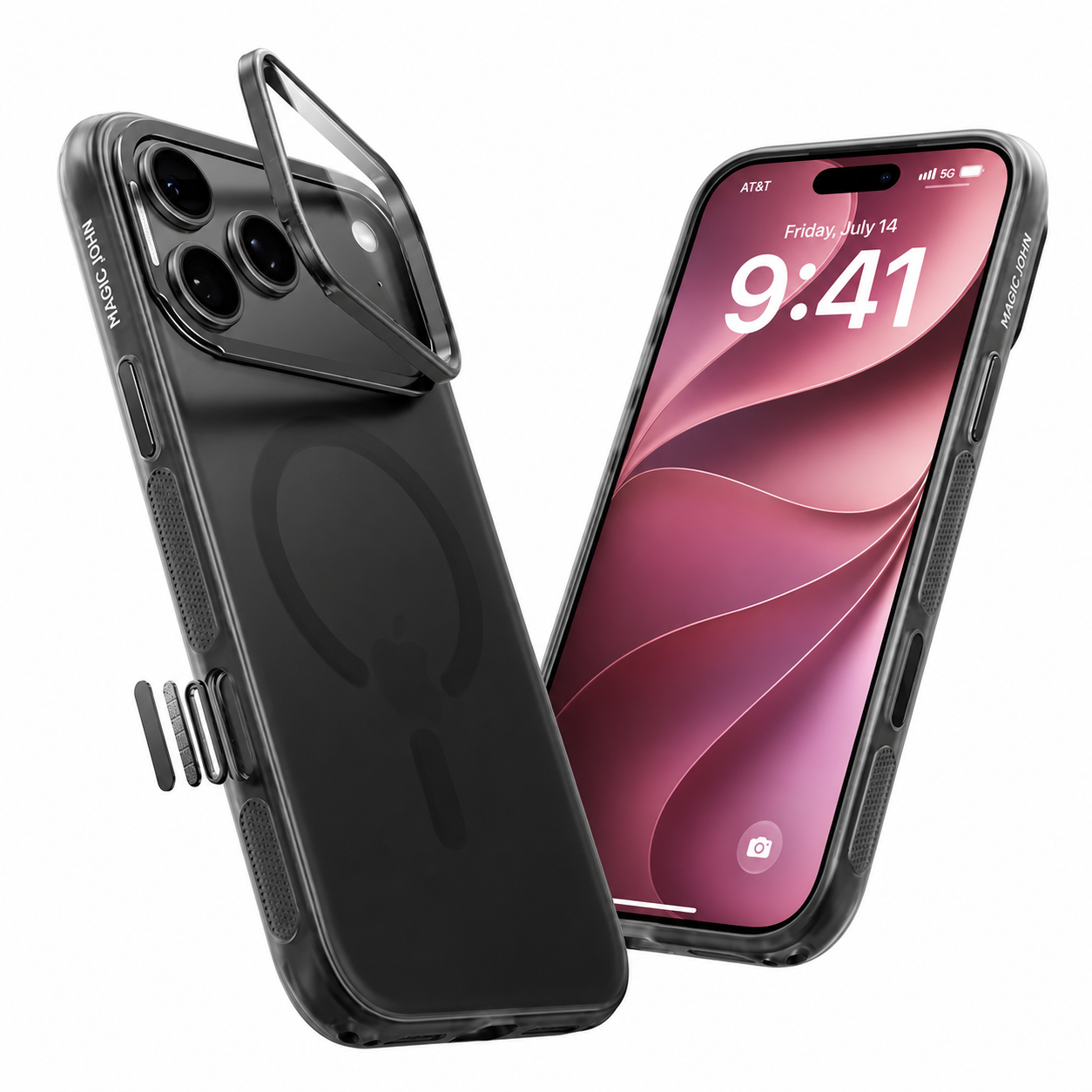
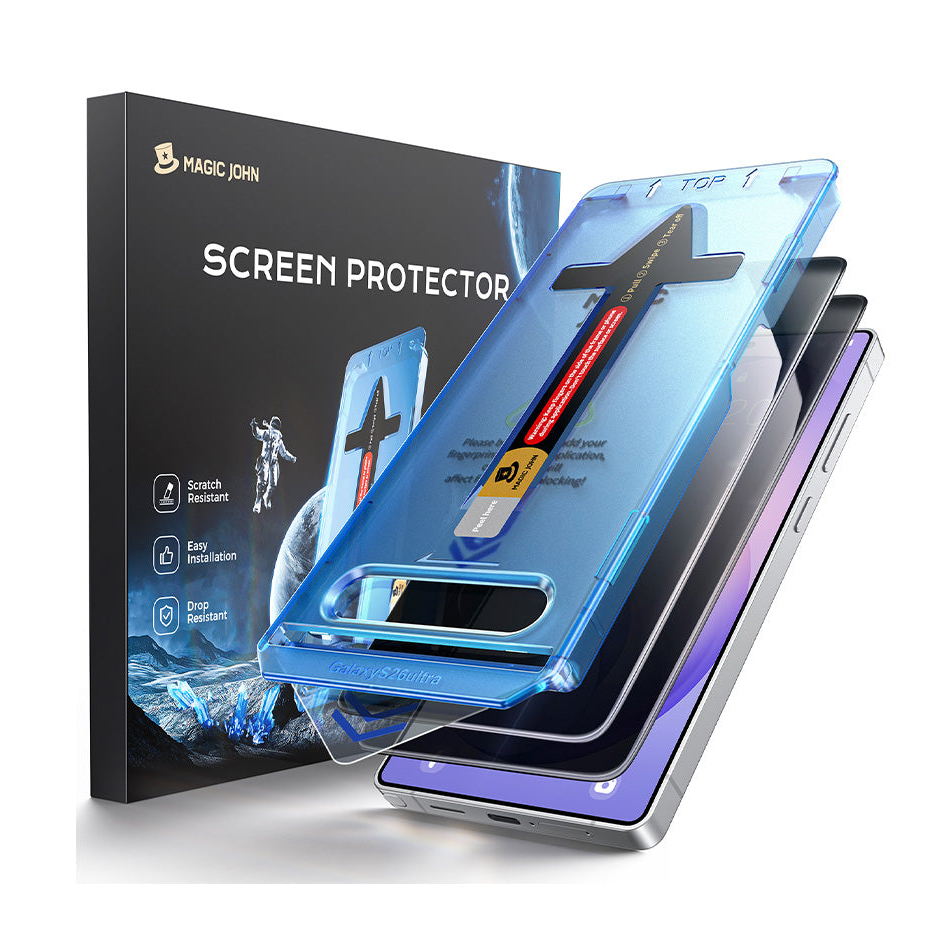
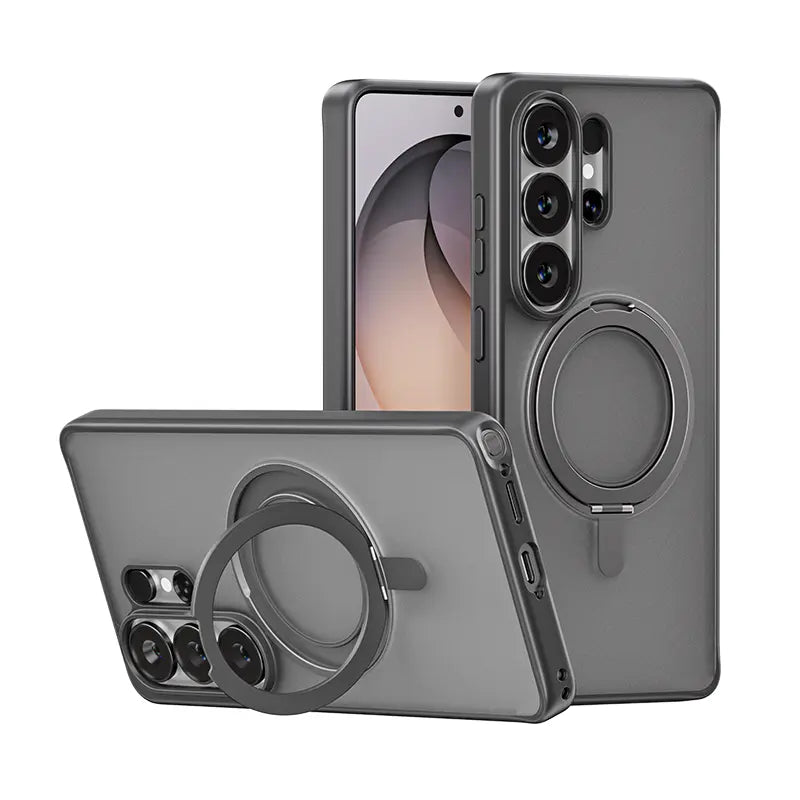

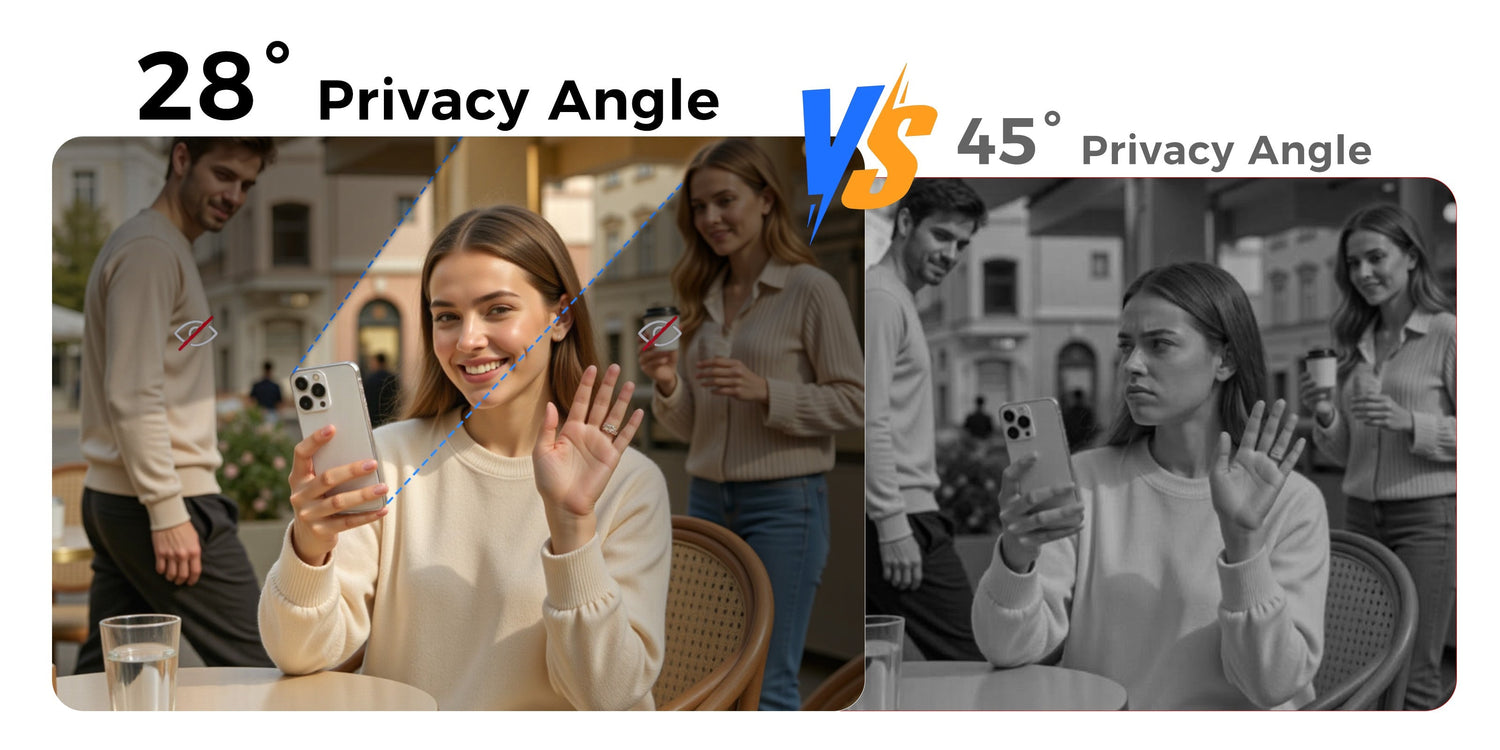
Los protectores de pantalla de privacidad de 28° crean una ventana de visión mucho más estrecha que los de 45°, lo que significa una privacidad mucho mejor en movimiento con solo una pequeña pérdida de brillo. Para las personas que usan sus teléfonos en público, especialmente en el metro, aviones u oficinas abiertas, un ángulo de visión estrecho película de privacidad Para iPhone u otros teléfonos, es una de las formas más sencillas de mantener la privacidad de las pantallas sin cambiar los hábitos diarios.
Cómo las pequeñas persianas verticales ocultan tu pantalla
Un protector de pantalla de privacidad utiliza microlámina Tecnología: imagínese miles de diminutas persianas verticales superpuestas en el interior del cristal. Estas lamas microscópicas permiten que la luz pase directamente a la persona que está justo enfrente, pero bloquean o atenúan la luz en los ángulos laterales.
Cuando alguien a tu lado intenta mirar, lo que ve son las persianas cerradas desde un lado, por lo que tu pantalla se ve oscura o casi negra. Desde tu posición, las lamas están abiertas, así que aún puedes ver la pantalla con suficiente claridad para el uso diario.
Por eso una protector de pantalla de privacidad A veces se le llama cristal templado anti-espías. Su función es determinar desde qué ángulos se puede ver la pantalla. En los modelos modernos, esta tecnología se combina con un resistente cristal 9H y recubrimientos antihuellas, para que obtengas privacidad, protección contra arañazos y un tacto más suave en una sola capa.

Comparación entre 28° y 45°: La verdad sobre los ángulos de visión
Cuando las marcas hablan de un “Protector de pantalla de privacidad de 28° frente a 45°., En realidad, se refieren a la amplitud del área visible al mirar el teléfono. Un protector de 28° crea un cono de visibilidad muy estrecho, generalmente de unos 14° a cada lado del centro, mientras que las versiones de 45° permiten una visión lateral mucho más amplia.
Esto es lo que significa en la vida real:
28° (estrecho)
- Mayor privacidad: las personas que se encuentran ligeramente descentradas ya ven una pantalla oscura o borrosa.
- Ideal para espacios concurridos como el metro, los autobuses, las cafeterías o las oficinas diáfanas.
- Se observa una ligera reducción del brillo debido a que las rejillas filtran más luz lateral.
45° (más ancho)
- Si la privacidad es menor, alguien sentado a tu lado tendrá más posibilidades de ver lo que aparece en tu pantalla.
- Un poco más fácil para compartir la pantalla con amigos que estén sentados a tu lado.
- Suele ser un poco más brillante, ya que el filtrado es menos agresivo.
En resumen, el Cuanto menor sea el ángulo, mayor será la privacidad.. Si su principal preocupación es mantener seguros sus mensajes de texto y aplicaciones bancarias en público, un diseño de privacidad estrecho de 28° suele ser una mejor opción que uno de 45°.
Tabla comparativa rápida
| Característica | Protector de pantalla de privacidad de 28° | Protector de pantalla de privacidad de 45° |
| Fuerza de bloqueo en vista lateral | Muy alta (privacidad estricta) | Moderado (privacidad básica) |
| Uso ideal | Metro, vuelos, cafés concurridos | Uso doméstico y de oficina informal |
| Brillo de la pantalla desde el frente | Ligeramente reducido | Más cerca de lo normal |
| Riesgo de surfear sobre los hombros | Mucho más bajo | Más alto |
Vistas nítidas desde el frente
Una preocupación común sobre cualquier protector de pantalla de privacidad es: "¿Mi pantalla se verá opaca o granulada?". La tecnología moderna de microláminas está diseñada para que, vista de frente, la pantalla siga luciendo nítida y colorida.Un buen cristal templado anti-espías mantiene una alta transmisión de luz frontal, bloqueando únicamente la luz lateral.
Por eso verás especificaciones como 99,99% de transparencia o afirmaciones de que el cristal conserva el color y el brillo originales. Incluso con un ángulo de visión reducido. Lámina de privacidad para iPhone Ya sea para Android o para otras plataformas, la idea es que tu experiencia cotidiana normal (redes sociales, vídeos, mapas) se sienta lo más parecida posible a la de un protector de vidrio templado de alta calidad.
Si notas alguna diferencia, suele ser muy sutil: quizás subas un poco el brillo bajo la luz del sol o al ver películas oscuras. Pero para la mayoría, la desventaja es mínima en comparación con el beneficio de mantener el contenido personal oculto de miradas indiscretas.
Cómo evitar que desconocidos lean tus mensajes de texto
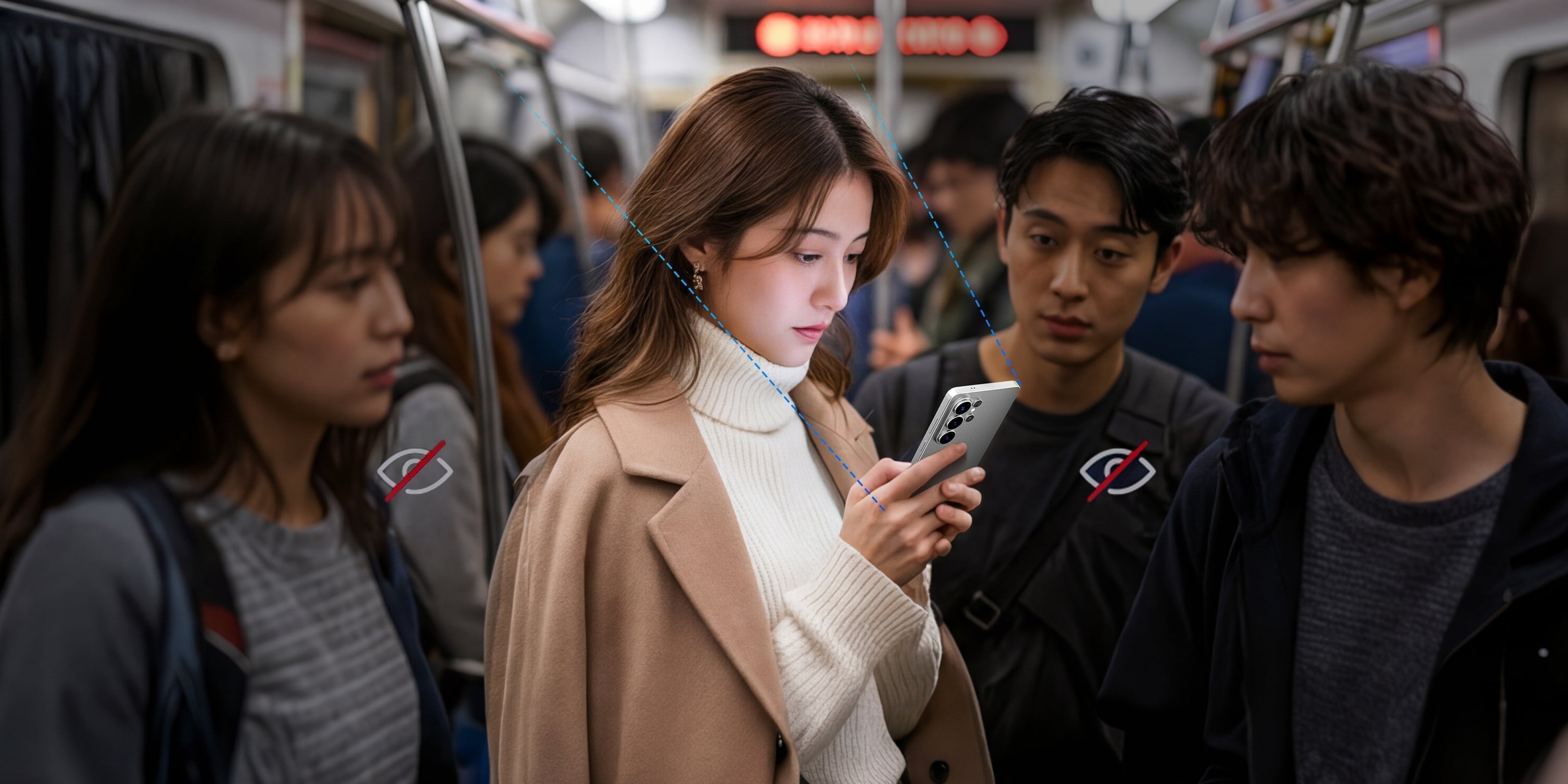
“Surfear por encima del hombro” Esto es lo que sucede cuando alguien cercano lee tu pantalla sin permiso, y es más común de lo que la gente piensa, especialmente en el transporte público. protector de pantalla de privacidad Reduce drásticamente este riesgo porque, más allá de cierto ángulo, lo único que se ve es una imagen oscura o descolorida.
Para los usuarios del metro, el mejor protector de pantalla de privacidad suele ser uno con:
- Un ángulo de visión estrecho (alrededor de 28°) para que la persona que esté a tu lado no pueda ver mucho aunque estéis muy juntos.
- Cristal templado resistente (a menudo con una dureza de 9H) para soportar golpes, caídas y sacudidas de la bolsa.
- Un revestimiento oleofóbico (antihuellas dactilares) para que tu pantalla no se ensucie fácilmente después de un largo trayecto.
Aquí es donde el cristal templado anti-espías realmente destaca: puedes consultar correos electrónicos, abrir aplicaciones bancarias, leer mensajes directos o revisar archivos de trabajo en un tren o autobús lleno de gente sin sentirte observado. Es una capa sencilla que te protege discretamente en segundo plano cada vez que desbloqueas el teléfono.
Cómo elegir el escudo adecuado para sus datos
Cuando estás comparando un Protector de pantalla de privacidad de 28 grados frente a 45 grados. y otras opciones, ayuda pensar en tu rutina diaria. Hazte algunas preguntas sencillas:

- ¿Dónde usas más el teléfono: en el metro, en la oficina, en casa, en las cafeterías, en los vuelos?
- ¿Sueles manejar información confidencial del trabajo o bancaria en tu teléfono?
- ¿Necesitas compartir tu pantalla con personas sentadas a tu lado con frecuencia?
Si sueles estar en entornos concurridos, protector de pantalla de teléfono con tecnología de microláminas Un ángulo estrecho (alrededor de 28°) suele ser la opción más segura. Ofrece una gran privacidad a la vez que mantiene la vista frontal clara y legible.
Si usas principalmente tu teléfono en casa o solo deseas una privacidad moderada, un estilo más amplio de 45° puede sentirse un poco más "abierto", especialmente al mostrar fotos o videos a amigos que están a tu lado. De cualquier manera, busca características como cobertura de borde a borde, herramientas de instalación sin burbujas, y un embalaje ecológico para que el protector sea fácil de aplicar y cómodo de usar a largo plazo.
Una breve nota sobre Magic John
Magic John se centra en vidrio templado de primera calidad con opciones de privacidad avanzadas, incluido un diseño anti-espía de 28° que limita la visibilidad para las personas sentadas a tu lado. Sus protectores de pantalla combinan una estricta privacidad con una dureza de 9H, aplicadores sin polvo, y revestimientos lisos y antimanchas, lo que los convierte en una excelente opción si busca seguridad y una pantalla limpia y nítida.
Preguntas frecuentes sobre protectores de pantalla de privacidad
P1: ¿Un protector de pantalla de privacidad dañará mi pantalla o la sensibilidad táctil?
No.Un protector de pantalla de privacidad de calidad es una capa delgada que se coloca sobre la pantalla y está diseñado para mantener la respuesta táctil y el rendimiento de la pantalla normales, bloqueando únicamente la visión lateral.
P2: ¿Es 28° demasiado oscuro para el uso diario?
La mayoría de los usuarios consideran que un filtro de privacidad de 28° es perfectamente utilizable, sobre todo en interiores, aunque puede que sea necesario aumentar ligeramente el brillo bajo la luz solar directa. A cambio, se obtiene una protección mucho mayor contra las miradas indiscretas a tu teléfono.
P3: ¿Cuál es la diferencia entre la lámina de privacidad y el vidrio templado normal?
Vidrio templado estándar Protege contra arañazos y caídas pero no hace nada por la privacidad de la vista lateral. película de privacidad El cristal templado de privacidad incorpora microláminas que reducen el ángulo de visión, de modo que solo la persona que se encuentra directamente frente a la pantalla ve el contenido con claridad.
P4: ¿La pantalla de privacidad es solo para teléfonos de trabajo?
En absoluto. Cualquier persona que use su teléfono en público (para consultar aplicaciones bancarias, de citas, mensajes personales o información médica) puede beneficiarse de la protección de la privacidad. Es simplemente otra forma de mantener la privacidad de tu vida privada.
P5: ¿Cuánto dura un protector de pantalla de privacidad?
Con un uso normal, un buen cristal templado anti-espías puede durar tanto como un protector común, a menudo hasta que cambies de teléfono o sufras una caída importante. Si se agrieta, suele ser porque absorbió el impacto que podría haber dañado la pantalla, lo que significa que cumplió su función.
Una vez agrietada, reemplácela de inmediato para mantener una protección continua.
Una elección acertada protector de pantalla de privacidad te da más control sobre quién ve tu pantalla, sin cambiar la forma en que usas tu teléfono día a día. Si pasas mucho tiempo en movimiento o en espacios compartidos, explorar una opción de ángulo estrecho de un marca como Magic John Puede ser una forma sencilla y que requiere poco esfuerzo para proteger tanto su pantalla como sus datos personales.


Deja un comentario
Este sitio está protegido por hCaptcha y se aplican la Política de privacidad de hCaptcha y los Términos del servicio.