




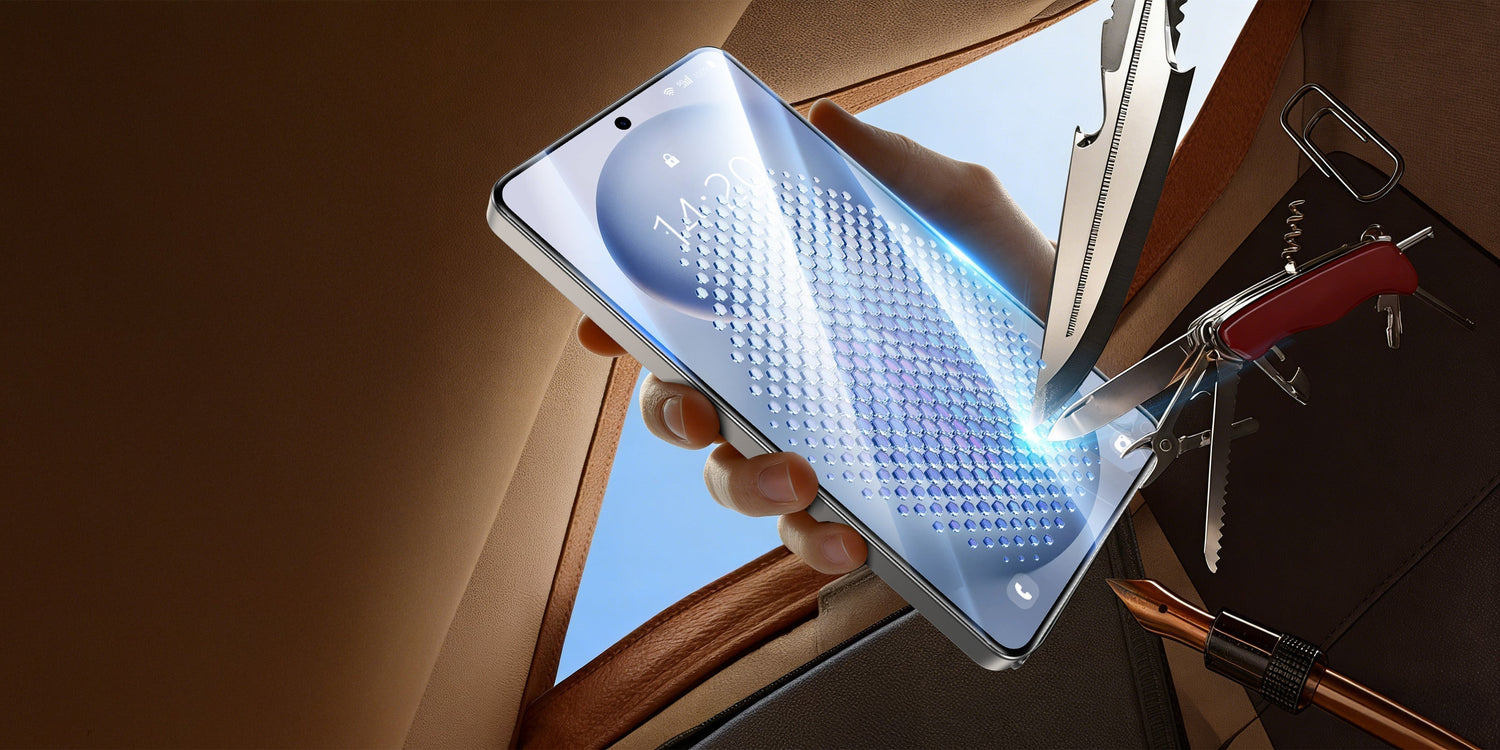
If you have a quality phone screen protector installed, that moment when your phone drops usually turns into relief. You pick it up, wipe it off, and move on.
But how does a thin sheet of glass actually stop a shattered screen?
For the practical smartphone user, the engineering behind your gear determines the right choice.
What Is 9H Hardness in Screen Protectors?
If you have shopped for a phone screen protector, you have likely seen "9H" printed on the box. The industry relies on this standard, but many people mistake 9H for a measure of "unbreakability." We need to bust that myth.
The "H" refers to the Mohs scale of mineral hardness. This scale measures a material's resistance to scratching, not shattering. Friedrich Mohs developed the scale in 1812 to classify minerals.
- Talc: Rated at 1 (very soft).
- Steel Knife: Rated around 5.5.
- Quartz (Sand): Rated around 7.
- Diamond: Rated at 10 (the hardest natural material).
A 9H rating indicates resistance to scratches from anything softer than a 9H pencil (which is harder than most metals).
Why does scratch resistance matter for drop protection?
For men who keep their phones in the same pocket as keys, coins, or pocket knives, this hardness is vital. A scratched screen becomes structurally weak.
Consider a windshield. A small chip remains annoying but harmless until you hit a pothole. Then that small chip turns into a massive crack. The same physics apply to your phone. Micro-scratches create "stress risers," weak points where tension gathers. Preventing these scratches with 9H hardness preserves the glass's structural integrity for a big impact.
Does High Hardness Mean Better Drop Protection?
So if 9H protects against scratches, does higher hardness mean better drop protection? No. High hardness prevents scratches, but drop protection requires toughness.
In materials science, "hardness" and "toughness" are two different metrics. This helps you see why plastic protectors fail where glass succeeds.
- Hardness: The ability to resist surface indentation or scratching (e.g., a diamond).
- Toughness: The ability to absorb energy and plastically deform without fracturing (e.g., a car tire).
A diamond is the hardest material on earth, but if you hit a diamond with a hammer, it shatters into dust. A diamond is hard, but not tough. A rubber tire is tough (bounces back from a hammer blow) but not hard (you can cut a tire with a pocket knife).
A great screen protector must find the middle ground. Hard enough to resist the daily grind of pocket sand and keys, yet tough enough to handle a drop.
The tempering process achieves this balance. Heat the glass to extreme temperatures (over 750°F), then cool rapidly with blasts of air. This process compresses the outer surface of the glass while leaving the center in tension. This internal tension makes the glass significantly stronger than standard glass. The protector can flex slightly upon impact, absorbing shock rather than immediately snapping.
Why Is a Cracked Protector Actually Good News?
If you see a cracked protector after a drop, your phone screen is likely intact.
The primary job of tempered glass is to manage energy. This forms the core of tempered glass shock absorption science.
Modern vehicles have "crumple zones." A car hits a wall, and the front end crushes. The crushing action looks terrible, but uses up the kinetic energy of the crash, keeping the energy away from the passengers inside.
Your screen protector acts as the crumple zone for your phone.
The Sequence of a Drop:
- Impact: Your phone hits the ground. A massive amount of kinetic energy is generated instantly.
- Transmission: Without a protector, that energy travels directly into the phone's display panel (the digitizer and OLED/LCD layers). These are delicate and expensive.
- Absorption & Dissipation: A tempered glass protector sits on top as a "sacrificial layer." Upon impact, the protector absorbs the shock. If the force is too great, the protector shatters.
Breaking the chemical bonds in the glass takes energy. Shattering the protector dissipates the shockwave before penetration through to the actual phone screen. This explains how 9H tempered glass protects against drops.
How Many Layers Does a Screen Protector Have?
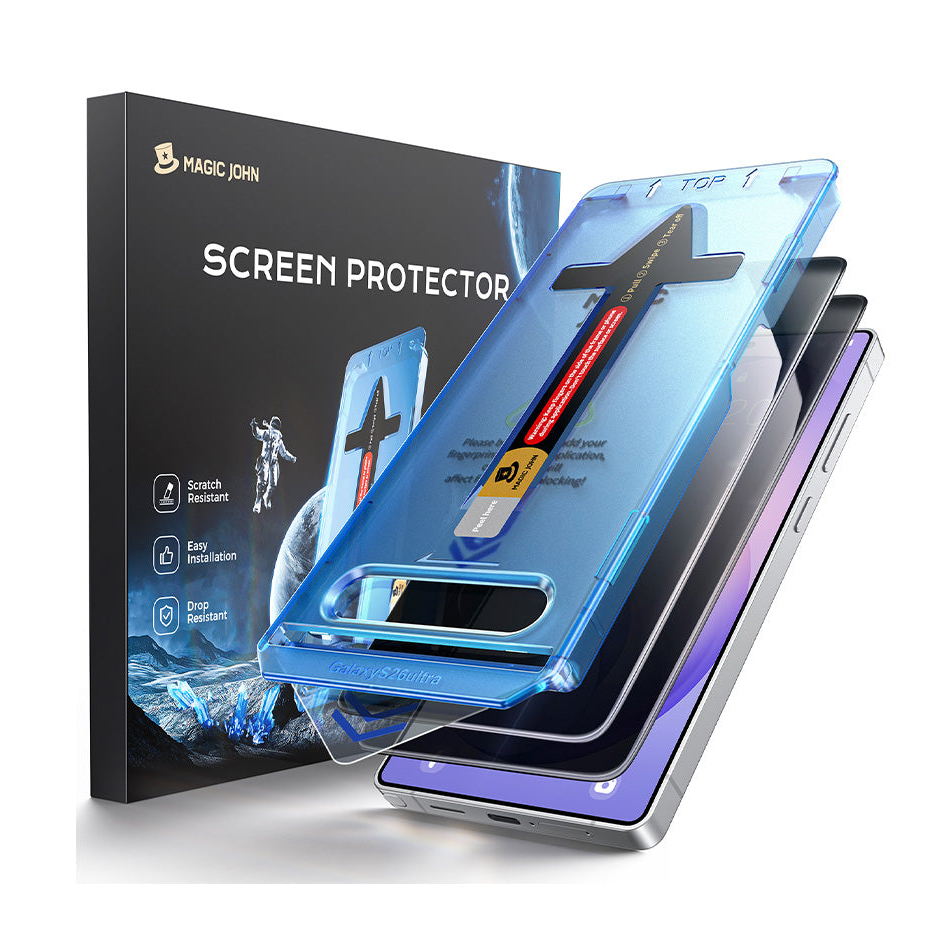
A premium screen protector contains a sophisticated "sandwich" of multiple layers, each with a specific purpose. This helps separate the cheap plastic knock-offs from the real deal.
The Oleophobic Coating:
The top layer. An electroplated coating repels oil and fingerprints. Your fingers glide across the screen smoothly, like the original display.
The Tempered Glass:
The core structural layer. Provides the 9H hardness and the impact resistance.
The Anti-Explosion Film:
A critical safety feature. A laminate layer (similar to a car windshield) holds the glass together if it shatters. Prevents dangerous shards from flying out and cutting your fingers.
The Silicone Adhesive:
The bottom layer. This shock-dampening layer ensures a bubble-free bond with your phone screen. If this layer is low quality, you get bubbles, and bubbles are weak spots that ruin protection.
What Happens When Your Phone Lands on a Corner?
Corner drops are the most dangerous. All the impact force concentrates on a tiny point.
If you drop your phone flat on its face, the force spreads out evenly. In the real world, phones rarely land perfectly flat. They tumble. They hit corners. They strike uneven surfaces.
The edge of a piece of glass is always its most vulnerable point. An impact on the side creates a shockwave that travels horizontally through the glass, which can separate the screen from the phone frame or shatter the display underneath.
The Solution: 2.5D and 3D Curved Edges
High-quality protectors feature a curved edge. This serves three distinct purposes:
- Deflection: A curved edge deflects impact energy away from the critical stress points at the corner of the device.
- Durability: Prevents the protector from chipping. Once a protector chips on the edge, its structural integrity is compromised, and requires immediate replacement.
- Ergonomics: Ensures the protector doesn't snag on your pocket or your finger. This prevents "lifting," where the protector peels up, allowing dust to get underneath.
How Much Does Screen Repair Actually Cost?
As phone prices climb, so do repair costs. We often overlook the financial logic of protection until too late.
The math becomes undeniable.
| Expense Item | Estimated Cost | Notes |
| Premium Tempered Glass Kit | $20 - $30 | 2 pieces per pack. |
| iPhone 17 Pro Max Screen Repair | $379+ | Price without AppleCare+. |
| Samsung S26 Ultra Screen Repair | $299 - $449 | Depends on the service center and parts availability. |
| Hidden Cost: Trade-In Value | $100 - $300 Loss | A scratched or replaced screen lowers trade-in value significantly. |
You can buy ten screen protectors for the price of a single screen repair.
Beyond the immediate cash, consider the time and data risk. Getting a screen repaired takes time. You might have to leave your phone at a shop for a day. Data loss or compromised waterproof seals during repair are also risks.
A protector is essentially an insurance policy with a zero-dollar deductible. You install, you forget, and during an accident, you peel off the broken layer and apply a new one. Zero downtime. Zero data loss.
Get the Protection You Need
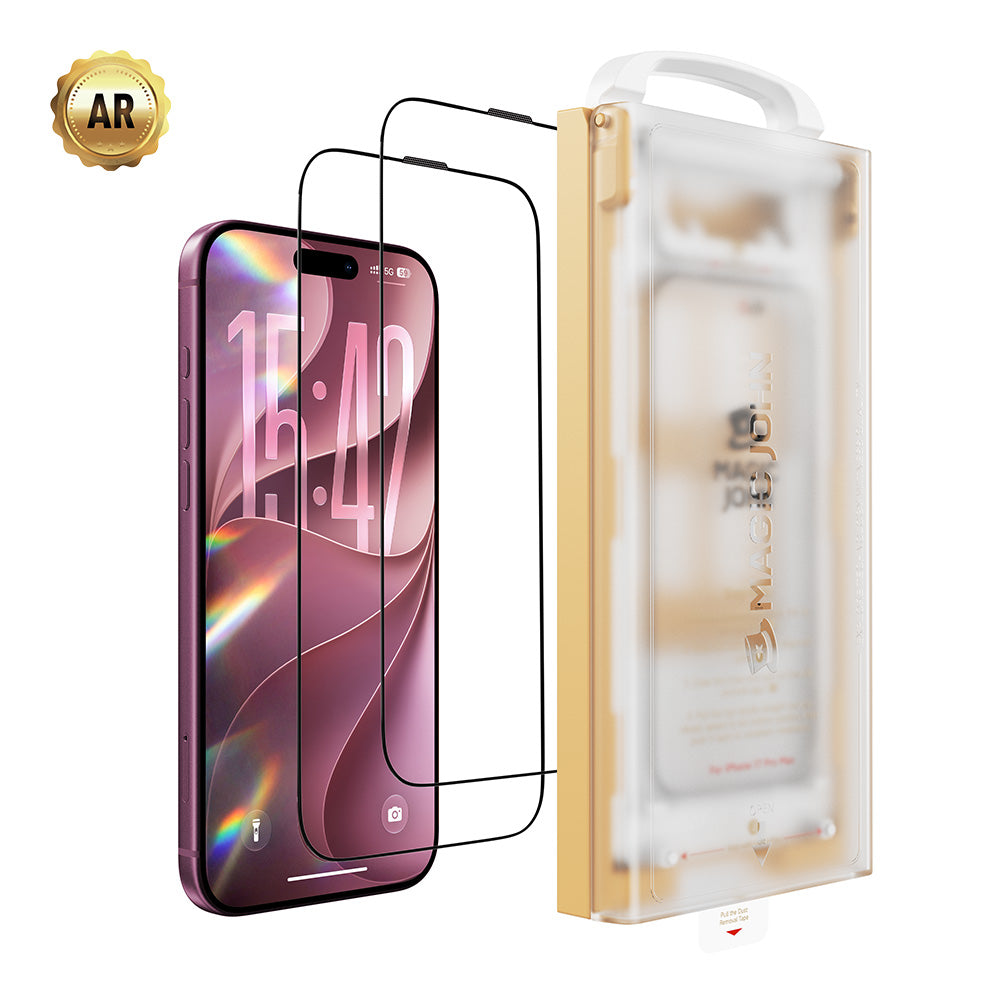
MAGIC JOHN combines top-tier 9H tempered glass with our innovative auto-alignment mounting box and dust-removal pull strip. You place the box over your phone, pull the strip to automatically eliminate dust, and watch it seal. No steady hands. No perfect vision. No clean room required.
FAQs
Q1: Does a cracked screen protector mean my phone screen is also broken?
Rarely. If your protector cracks, the protector did its job successfully. The protector absorbed the energy of the impact so your actual screen didn't have to. You should carefully peel off the broken protector to inspect the phone; in 99% of cases, the screen underneath is pristine.
Q2: Why does dust cause bubbles, and does dust weaken the protection?
Dust creates air pockets where the adhesive cannot touch the glass. These bubbles create uneven pressure points. In a drop, the shockwave cannot travel evenly through the adhesive, causing the protector to fail at that specific spot. MAGIC JOHN's dust-removal strip eliminates the dust during the installation process.
Q3: Does 9H glass affect the touch sensitivity of my phone?
No. High-quality tempered glass is conductive, like your original screen. Cheap, thick plastic protectors can kill sensitivity, but premium glass transfers the static electricity from your finger to the digitizer instantly. You won't notice the protector.
Q4: Will a screen protector work with my phone case?
Depends on the design. Look for "Case-Friendly" protectors. These are designed to stop short of the phone's edge, leaving a tiny gap. This ensures that the lip of your phone case doesn't push against the glass, which would cause lifting and bubbling. MAGIC JOHN protectors are designed specifically to be case-friendly.
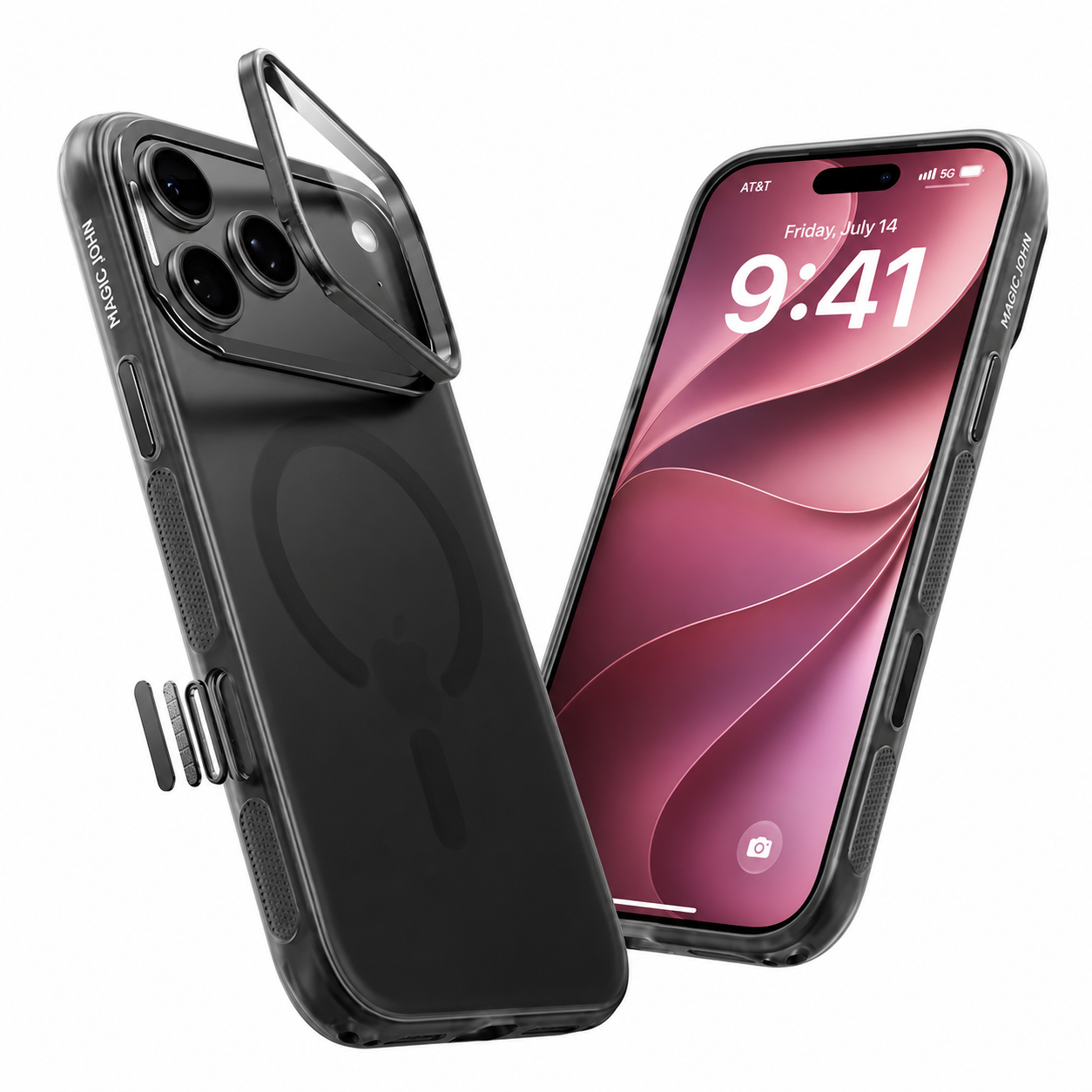
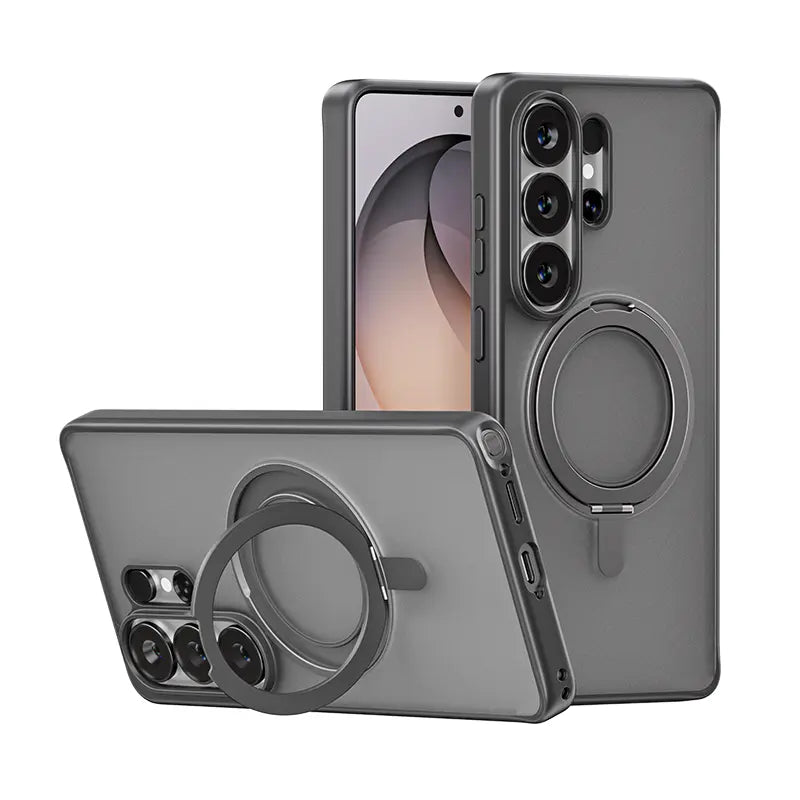
For 100% fitness, choose our phone case designed to fit your phone perfectly and work with our protectors.
Q5: How often should I replace my screen protector?
Replace immediately if the protector cracks or chips. A compromised protector cannot absorb shock effectively anymore. For aesthetic purposes, if the oleophobic (anti-fingerprint) coating wears off and the screen feels "sticky," replace with a fresh protector.



Leave a comment
This site is protected by hCaptcha and the hCaptcha Privacy Policy and Terms of Service apply.