

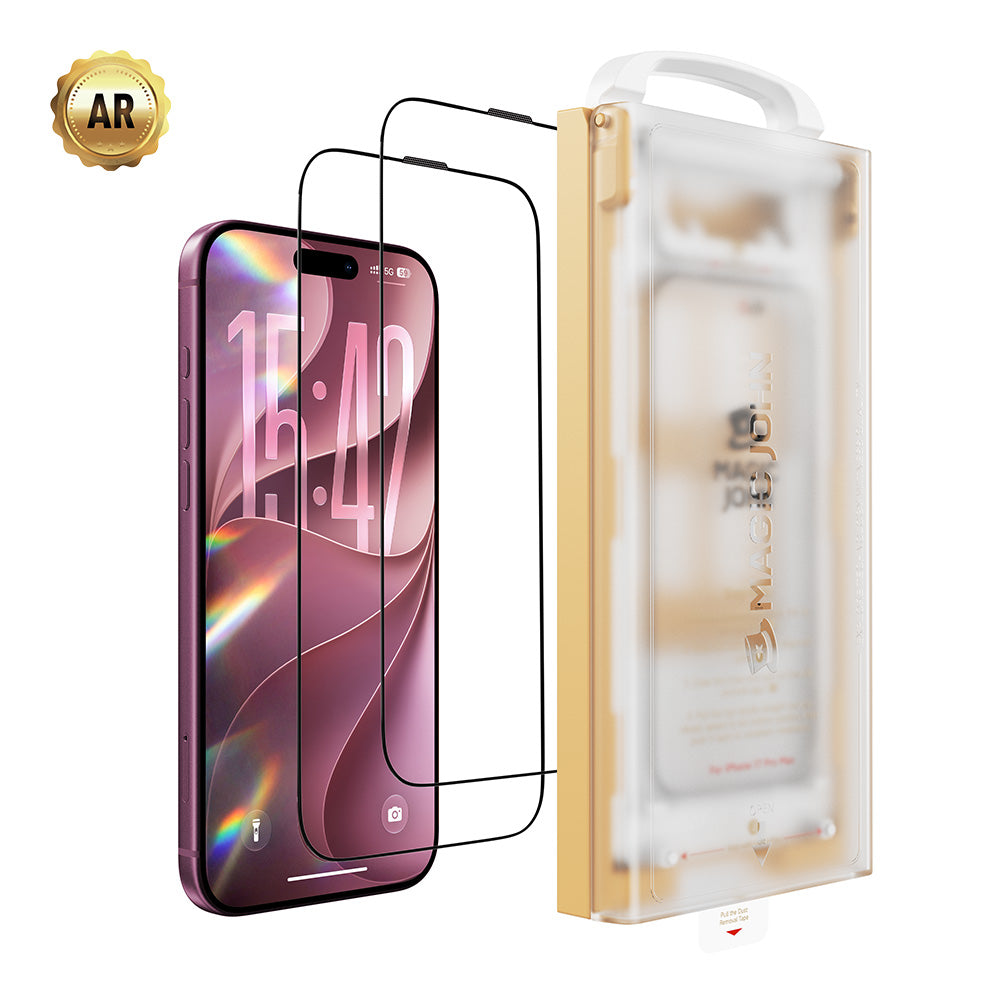
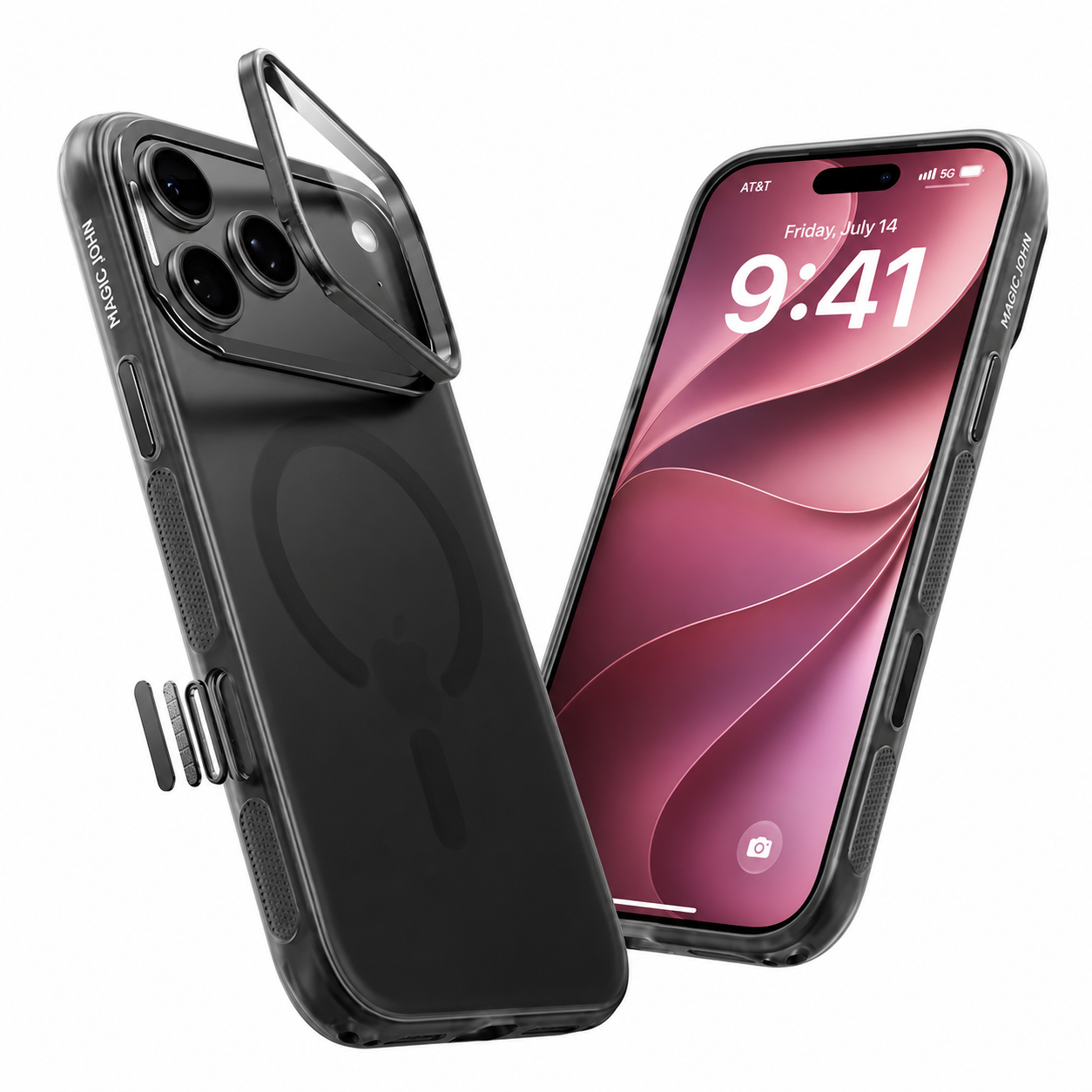



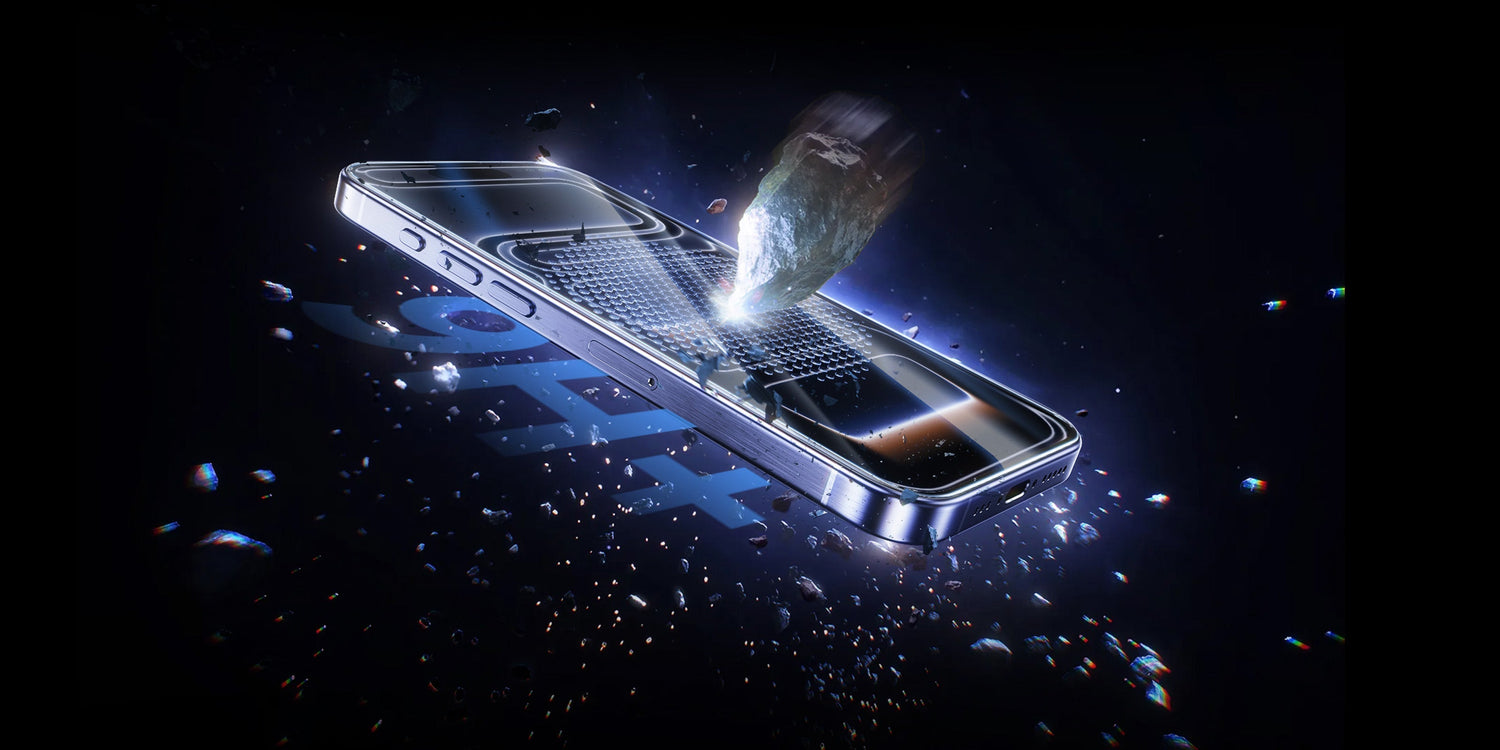
Le remplacement d'un écran d'iPhone chez Apple peut coûter bien plus de 400 dollars, selon le modèle. Face à ce prix, un protecteur d'écran Le choix est simple. La difficulté réside dans le choix du produit. Un protecteur fabriqué avec le bon matériau, mais dont la finition est inadaptée à votre environnement, sera inefficace. La plupart des acheteurs font consciemment l'un de ces deux choix. Ce produit couvre les deux aspects, vous assurant ainsi de choisir celui qui remplit parfaitement sa fonction.
Que signifie réellement la « protection d’écran » pour iPhone ?
Choisir un protecteur d'écran Cela implique deux décisions distinctes que la plupart des acheteurs confondent. Il en résulte le choix d'un revêtement avant même de décider de la surface à recouvrir.
Dimension 1 : Matériau — détermine la dureté, le toucher et le prix. Les deux principaux types sont le verre trempé et le film TPU.
Dimension 2 : Finition — Un traitement de surface appliqué sur le matériau. Les options incluent l'occultation, l'antireflet et la transparence standard. Ces traitements se superposent au matériau ; ils ne le remplacent pas.
| Votre priorité absolue | Point de départ | Où chercher |
| Protection contre les chutes la plus courante | Verre trempé | Voir la section suivante |
| Besoins de couverture intégrale | film TPU | Section TPU ci-dessous |
| Le respect de la vie privée dans les espaces publics | Matériau + fonction de confidentialité | Section des fonctionnalités ci-dessous |
| Utilisation en extérieur/en plein soleil | Matériau au choix + traitement antireflet | Section des fonctionnalités ci-dessous |
| Pas encore sûr | Poursuivez votre lecture pour découvrir les comparaisons. |
Protections d'écran en verre trempé : qu'est-ce qui les différencie ?
Comment le verre trempé protège réellement
Le verre standard se brise en transmettant la force directement à travers le matériau. Verre trempé Il est traité thermiquement ou chimiquement pour créer des couches de contraintes opposées : compression en surface, tension au cœur. Lors d’un impact, la couche externe absorbe et répartit la force au lieu de la transmettre directement à votre corps. écran de téléphone.
La dureté 9H mesure la résistance aux rayures. Elle ne donne aucune information sur le comportement du verre en cas d'impact. Ce dernier est testé différemment et dépend de diverses caractéristiques du processus de fabrication.
Épaisseur et compromis
Les protections d'écran en verre trempé sont disponibles en différentes épaisseurs :
| Épaisseur | Sentir | Niveau de protection | Idéal pour |
| 0,15–0,2 mm | Au plus près du verre nu | Moyen (axé sur les rayures) | Manipulation légère, environnements à faible risque de chute |
| 0,3 mm | Standard | Haut (chute + rayure) | La plupart des utilisateurs |
| 0,5 mm+ | Poids perceptible | Le plus haut | Environnements à haut risque de chute |
Pour la plupart des utilisateurs d'iPhone, 0,3 mm est le point de départ pratique. Elle offre un équilibre parfait entre résistance aux chutes et toucher agréable, sans altérer sensiblement la réactivité du téléphone.
Le mythe de la dureté 9H
Presque tous les protecteurs d'écran en verre trempé disponibles sur le marché portent la mention 9H. Cette mention provient de… échelle de dureté des crayons, où 9H est la meilleure note.La plupart des protections d'écran en verre trempé répondent sans difficulté à cette norme, ce qui signifie que l'étiquette ne vous renseigne pratiquement pas sur les différences de qualité entre les produits.
Ce qui distingue réellement un verre trempé de qualité d'un verre trempé moyen, c'est le procédé de revêtement et le matériau de base. Les traitements multicouches et un verre brut de qualité supérieure offrent une meilleure clarté, un toucher plus doux et une résistance aux chutes plus constante.
Film protecteur d'écran en TPU : quand la flexibilité l'emporte
film TPU Elle a la réputation d'être une option de moindre qualité. Dans certains cas d'utilisation, cette réputation est erronée.
Quel film TPU ne peut pas faire ce que le verre ne peut pas faire ?
- Auto-guérison: Certains films TPU contiennent une couche polymère capable de combler les rayures superficielles superficielles à température ambiante. Le temps de réparation et la profondeur de la réparation varient selon le produit. Le verre trempé standard ne possède pas cette propriété.
- Couverture complète des bords : Beaucoup protections en verre trempé Les films de protection sont découpés légèrement plus petits que l'écran pour éviter qu'ils ne se soulèvent sur les bords, laissant ainsi une fine bande non protégée. Le film TPU peut couvrir toute la surface jusqu'au bord. Il existe des options en verre trempé couvrant l'intégralité de l'écran, mais elles sont moins courantes.
- Absorption des chocs par flexion : Le TPU se déforme légèrement à l'impact et dissipe l'énergie par ce mouvement. Le verre, quant à lui, résiste à la force grâce à sa dureté. Le choix du matériau le plus adapté dépendra de la surface la plus exposée aux rayures ou des bords non protégés.
Principale faiblesse du film TPU
- La résistance aux rayures est moindre. Les clés ou les objets pointus marquent plus facilement le TPU que le verre trempé.
- Certains matériaux TPU jaunissent légèrement avec le temps, notamment en cas d'exposition prolongée aux UV.
- Au toucher, la sensation et la clarté visuelle sont généralement inférieures à celles d'un verre trempé de qualité.
TPU vs. Verre trempé : un aperçu
| Fonctionnalité | Verre trempé | Film TPU |
| résistance aux rayures | Excellent | Bien |
| Protection contre les chutes | Haut | Moyen-élevé |
| Couverture des bords | Bien | Excellent |
| Auto-guérison | Non | Oui (sur certains modèles) |
| toucher | Au plus près de l'original | Légère traînée |
| Gamme de prix | Moyen à élevé | Faible à moyen |
Confidentialité et anti-éblouissement : comprendre la couche de fonctionnalités
Les traitements de confidentialité et antireflets sont appliqués à un matériau de base, comme du verre trempé ou du TPU. La plupart des fiches produits les présentent comme des catégories distinctes, ce qui peut laisser croire que vous devez choisir entre protection et fonctionnalités. Or, ce n'est pas le cas : vous choisissez les deux indépendamment.
Protections d'écran de confidentialité
Les protections de confidentialité utilisent une structure à micro-lamelles — un réseau de minuscules canaux verticaux qui limite la lumière visible à un cône de vision étroit situé directement devant l'écran. Toute personne regardant depuis un angle extérieur à ce cône voit un écran noir.
Le compromis réside dans la luminosité de l'écran. Les filtres de confidentialité réduisent la quantité de lumière atteignant vos yeux lorsque vous regardez l'écran de face ; la réduction exacte varie selon le produit. L'utilisation horizontale pour la vidéo ou les jeux est sensiblement affectée. La protection de la vie privée est particulièrement utile pour les personnes qui se déplacent quotidiennement, celles qui travaillent dans des bureaux en espace ouvert ou toute personne manipulant régulièrement des informations sensibles dans des espaces partagés.
Protections d'écran anti-reflets
Les protections antireflets utilisent une texture de surface mate qui diffuse la lumière incidente au lieu de la réfléchir vers l'utilisateur. En plein soleil ou sous un éclairage zénithal intense, la visibilité de l'écran est nettement améliorée.
Le traitement antireflet est optimisé pour une clarté optimale en extérieur, et non pour une précision pixel parfaite. La texture mate qui réduit les reflets adoucit légèrement les détails fins, notamment les contours des textes. Pour la retouche photo, le graphisme ou toute activité où la netteté de l'écran est primordiale, un finition transparente est plus adapté. Pour la lecture en extérieur, la navigation ou le travail de terrain, le gain en visibilité compense largement la perte de netteté.
Finition transparente
Un protecteur d'écran transparent standard ne comporte aucune couche filtrante supplémentaire. Il préserve la luminosité, la fidélité des couleurs et la netteté optimales de l'écran de l'iPhone. Pour les utilisateurs qui n'ont pas besoin de filtrage de la confidentialité et qui ne travaillent pas régulièrement en extérieur sous une forte luminosité, le protecteur transparent est l'option offrant la meilleure fidélité.
Fonction de correspondance rapide
| Cas d'utilisation | Finition recommandée |
| Déplacements domicile-travail, manipulation d'informations sensibles en public | Film de confidentialité |
| Travail en extérieur, sport, exposition fréquente au soleil | Film anti-reflets |
| Travaux de photographie, de design ou de vidéo | Finition transparente |
| usage quotidien général | Finition transparente (précision visuelle optimale) |
Meilleure protection d'écran pour iPhone par Lifestyle
Le même protecteur d'écran en verre de 0,33 mm peut convenir à une personne et être inapproprié pour son voisin. Voici comment déterminer de quel côté vous vous situez.
Profil 1 : Minimaliste/Sans étui
Qui est-ce ? Préfère la sensation d'un téléphone nu, sans coque, et souhaite que la protection soit aussi invisible que possible.
Recommandation: Verre trempé standard de 0,3 mm, finition transparente, design à bord couvrant intégralement.
Pourquoi: Sans coque, la protection d'écran est la seule défense physique du téléphone. Les modèles ultra-fins offrent une sensation proche du verre nu, mais au détriment d'une protection efficace contre les chutes. La protection intégrale des bords comble l'espace laissé par les verres classiques sur les bords.
Profil 2 : Utilisateur intensif/Priorité à l’écran
Qui est-ce ? Téléphone en main ou en poche pendant plus de 6 heures par jour, frottement constant contre les clés et les surfaces.
Recommandation: Verre trempé standard de 0,33 mm, finition transparente.
Pourquoi: Un frottement quotidien élevé signifie résistance aux rayures Pour ce type d'utilisation, une protection maximale contre les chutes est plus importante qu'une protection absolue. Une finition transparente préserve la qualité d'affichage optimale qu'exige une utilisation intensive.
Profil 3 : Plein air/Actif
Qui est-ce ? Construction, sports, travaux agricoles ou tout environnement avec des chutes fréquentes et une exposition aux débris.
Recommandation: Verre trempé plus épais (0,4–0,5 mm), finition antireflet, associé à un étui.
Pourquoi: Protecteur plus cas Ensemble, nous offrons des avantages sensiblement meilleurs protection contre les chutes que l'un ou l'autre pris séparément. Un verre plus épais résiste mieux aux chutes violentes. Un traitement antireflet est indispensable, car ce modèle est fréquemment exposé au soleil.
Profil 4 : Professionnel/Sensible à la vie privée
Qui est-ce ? Domaines juridiques, financiers, de la santé ou domaines similaires où le contenu des écrans est confidentiel dans des espaces partagés.
Recommandation: Verre trempé d'épaisseur standard avec finition intimité.
Pourquoi: En milieu professionnel, les téléphones sont souvent transportés dans des sacs, laissés sur un bureau et peuvent parfois tomber. L'épaisseur standard de 0,33 mm avec une couche de confidentialité répond à ces deux besoins. Opter pour une épaisseur inférieure afin d'ajouter d'autres fonctionnalités se ferait au détriment de la protection essentielle à ce profil.
Profil 5 : Client soucieux de son budget et effectuant des mises à niveau fréquentes
Qui est-ce ? Il change de téléphone tous les 12 à 18 mois et souhaite une protection fiable sans se ruiner. accessoires.
Recommandation: Verre trempé de milieu de gamme d'épaisseur standard, avec un cadre d'alignement d'installation compris.
Pourquoi: Une pose mal alignée implique souvent l'achat d'une deuxième protection avant même que la première n'ait été efficace. Un cadre d'alignement élimine la plupart de ce risque. Opter pour une marque proposant un service de remplacement permet de réduire le coût effectif par protection sur le long terme.
Un facteur qui affecte tous les profils de la même manière : la pose. Une protection posée avec de la poussière en dessous ou mal alignée, même d’un millimètre, se décollera plus rapidement sur les bords, des bulles se formeront et, dans certains cas, devra être remplacée avant même d’avoir protégé contre une seule chute. Choisir le bon matériau et la bonne finition n’est qu’une partie de la solution.
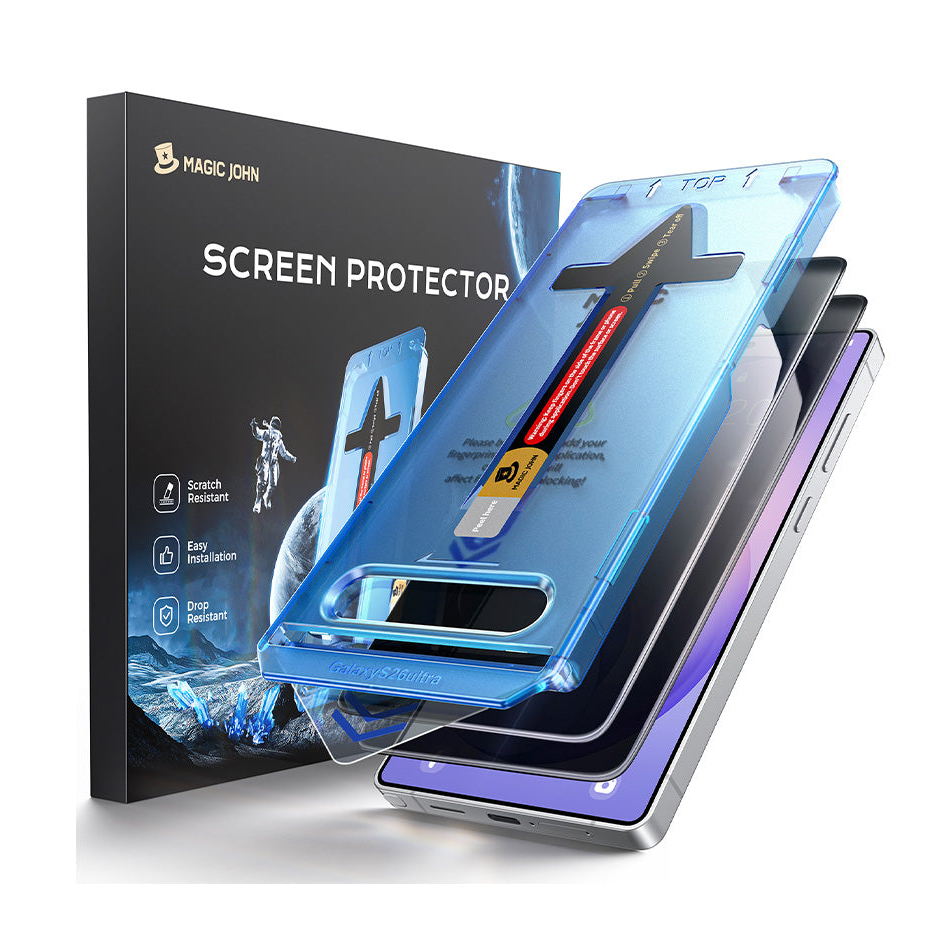
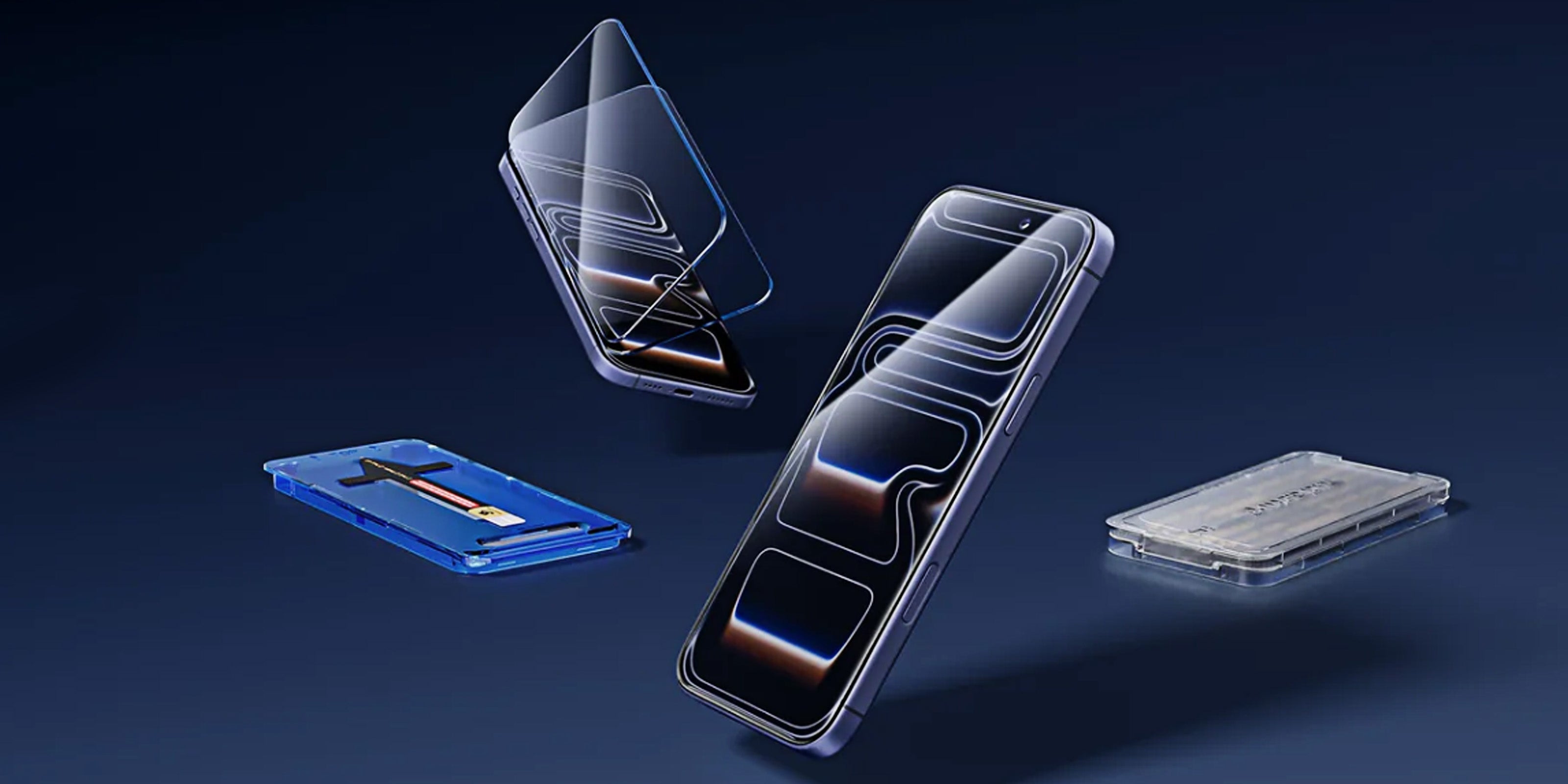
Applicateur sans poussière MAGIC JOHN'S Gen 3 Ce produit est conçu pour résoudre ce problème. Le cadre d'alignement positionne la protection avec précision, et le système automatique d'élimination de la poussière élimine la principale source de bulles lors de l'application. Cette gamme de protections est compatible avec les iPhone 12 à 17 et propose des versions transparentes et avec un angle de confidentialité de 28 degrés.

Trouvez le protecteur d'écran idéal
Choisissez le matériau adapté à la résistance de votre téléphone aux chutes et aux rayures. Adaptez la finition à l'utilisation que vous en faites. Appliquez ensuite la protection correctement pour que l'adhésif adhère bien à l'écran. Il est facile de se renseigner sur le matériau et la finition avant l'achat. L'installation est l'étape où la plupart des protections échouent avant même d'avoir pu être efficaces. MAGIC JOHN a été conçu pour simplifier cette dernière étape. Trouvez la protection adaptée à votre modèle d'iPhone sur magicjohn.com.
FAQ sur les protections d'écran pour iPhone
Q1 : Le verre trempé ou le TPU est-il meilleur pour l'iPhone ?
Le verre trempé offre une meilleure protection. Pour la plupart des utilisateurs d'iPhone, le film TPU offre une meilleure résistance aux rayures et un toucher plus naturel sur un écran plat. Il est à privilégier si vous avez besoin d'une protection intégrale bord à bord ou si vous préférez la flexibilité à la dureté de la surface. Pour un écran plat standard d'iPhone, optez plutôt pour du verre trempé.
Q2 : Un protecteur d’écran affecte-t-il la qualité d’affichage de l’iPhone ?
Un protecteur d'écran en verre trempé transparent a un impact minimal sur la qualité d'affichage. Les finitions anti-reflets et de confidentialité, quant à elles, affectent l'affichage de manière spécifique : le film de confidentialité réduit la luminosité frontale, l'effet variant selon le produit ; le traitement anti-reflets adoucit légèrement les détails fins grâce à sa texture mate. Pour les utilisateurs souhaitant profiter pleinement de l'écran de leur iPhone, une protection transparente est le choix idéal.
Q3 : À quelle fréquence dois-je remplacer la protection d’écran de mon iPhone ?
Remplacer en fonction de l'état, Il n'existe pas de calendrier d'utilisation fixe. Les rayures profondes qui accrochent l'ongle lors d'une utilisation normale affectent la sensibilité tactile et la capacité de la protection à absorber les chocs. Une protection ayant subi une chute importante peut paraître intacte, mais présenter des microfissures internes qui réduisent son efficacité. Le décollement des bords est un signe évident. Dès que l'adhérence se rompt sur le bord, la protection se déplace à l'impact au lieu de l'absorber.
Q4 : Puis-je utiliser un protecteur d’écran avec une coque de téléphone ?
Oui, Pour les utilisateurs actifs, la combinaison des deux est plus efficace que chaque élément pris séparément. Les coques protègent le châssis et absorbent les chocs latéraux ; les protections d'écran protègent des rayures superficielles et des chutes frontales. Lors de l'achat des deux, vérifiez que le rebord de la coque ne recouvre pas celui de la protection et n'entraîne pas de décollement des coins. La plupart des coques et protections d'écran standard sont compatibles, mais il est conseillé de vérifier pour les coques plus épaisses.



Laisser un commentaire
Ce site est protégé par hCaptcha, et la Politique de confidentialité et les Conditions de service de hCaptcha s’appliquent.