




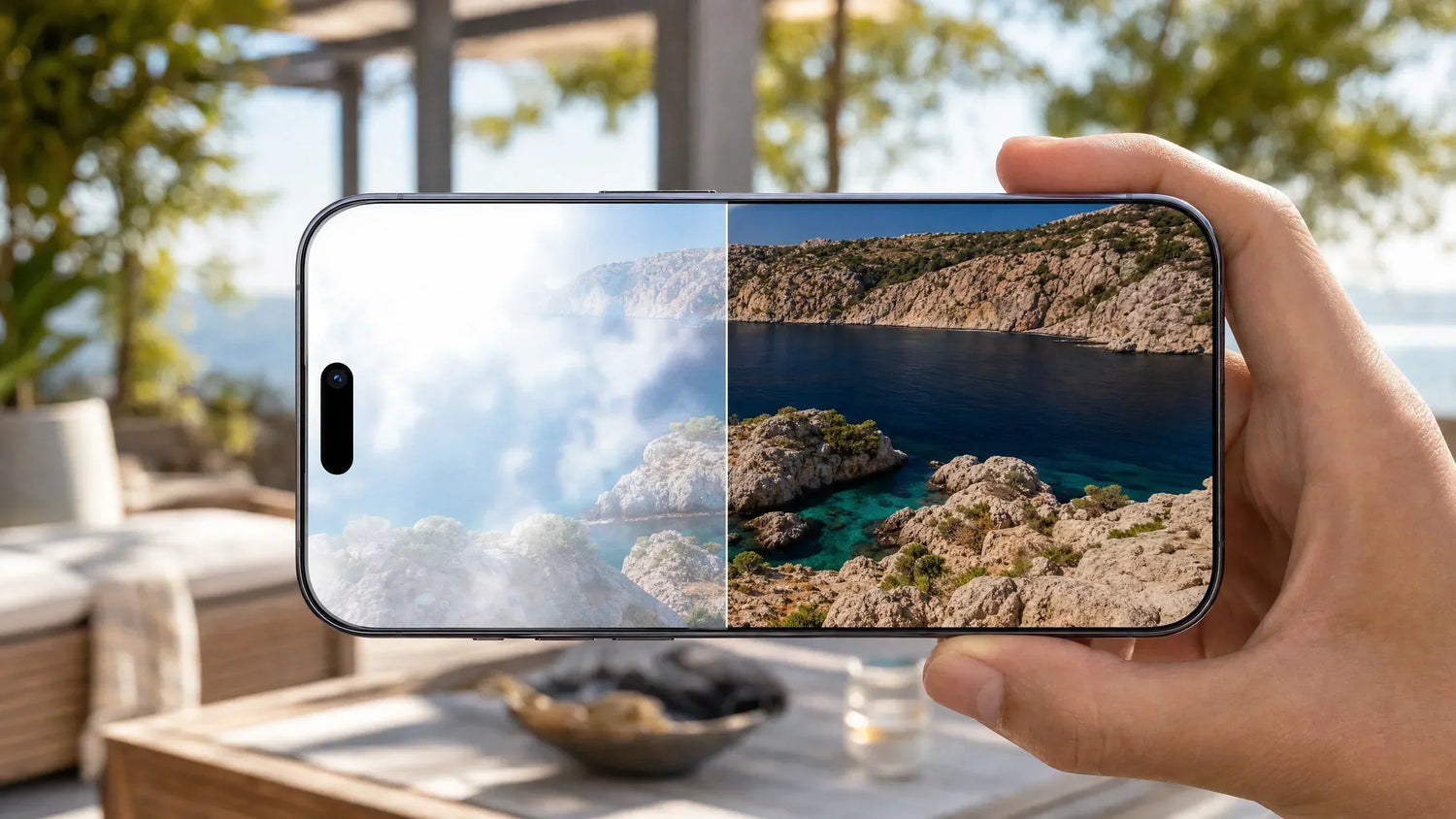
Is an anti-reflective screen protector worth it for iPhone? It can be—but only when reflections are a problem you actually notice. If you often lose sight of maps, messages, or camera controls under bright light, AR glass can be a useful upgrade. If your screen already looks comfortable in the places you use it, paying more may change very little.
This article does not compare every screen protector material again. Instead, it gives you a quick real-world test, a scenario-based decision table, and a checklist for separating useful AR features from vague marketing.
Quick answer: Buy AR for a repeated visibility problem, not because “AR” sounds more advanced. Your lighting, current iPhone, replacement habits, preferred screen finish, and the quality of the specific protector determine whether it is worth the premium.
Try the 60-Second Reflection Test First
Before comparing brands or prices, test the phone you already own in the place where glare bothers you most. This could be beside your office window, on a train, in a parked car, or outside your home.
- Clean the screen with a microfiber cloth.
- Set brightness to the level you normally use—do not raise it just for the test.
- Open one light page and one dark page, such as a message thread and a map in dark mode.
- Hold the phone at your normal viewing angle.
- Ask one question: Do reflections hide information or merely exist in the background?
If reflections regularly cover text, icons, faces, or camera controls, you have a real reason to consider AR. If you can see the content comfortably and only notice reflections when deliberately looking for them, a standard clear protector may already be enough.
What Are You Actually Paying For?
AR is a surface treatment. It is designed to reduce reflected light at the protector's outer surface. The underlying optical principle uses carefully controlled thin layers to reduce certain reflections; Edmund Optics provides a technical explanation of anti-reflection coatings.
The practical value is simpler: fewer distracting reflections without giving the screen the visibly textured appearance associated with many matte protectors. You are not automatically paying for stronger glass, better drop protection, longer coating life, or improved battery life. Those require separate evidence.
Comparing an AR screen protector to tempered glass is actually comparing apples to oranges. AR is a surface coating that reduces glare, while tempered glass is the physical material—and premium protectors combine both.
AR Is Valuable When It Preserves the Experience You Prefer
Some people want a smooth, glossy screen and accurate-looking fine detail but dislike seeing a window reflected over dark content. That combination is where clear AR glass has the clearest purpose. Someone who prefers a paper-like texture may get more value from matte anti-glare instead.
Why the Decision Is Different for iPhone 17
Apple lists an anti-reflective coating in the official iPhone 17 technical specifications. That factory treatment is part of the phone's original outer display surface.
Once a screen protector is installed, the protector becomes the first surface reached by ambient light. Its own reflection, haze, fingerprints, and coating quality now influence what you see. A standard glossy protector may therefore make the original anti-reflective benefit less noticeable. MacRumors reported this effect in third-party comparison testing; it was not an Apple test.
This creates three reasonable choices:
- Use the iPhone without a protector and keep the original outer surface, while accepting direct wear risk.
- Add standard clear glass when basic protection and price matter more than reflection control.
- Choose an anti-reflective screen protector for iPhone 17 when you want an added protective layer and still care about a lower-reflection outer surface.
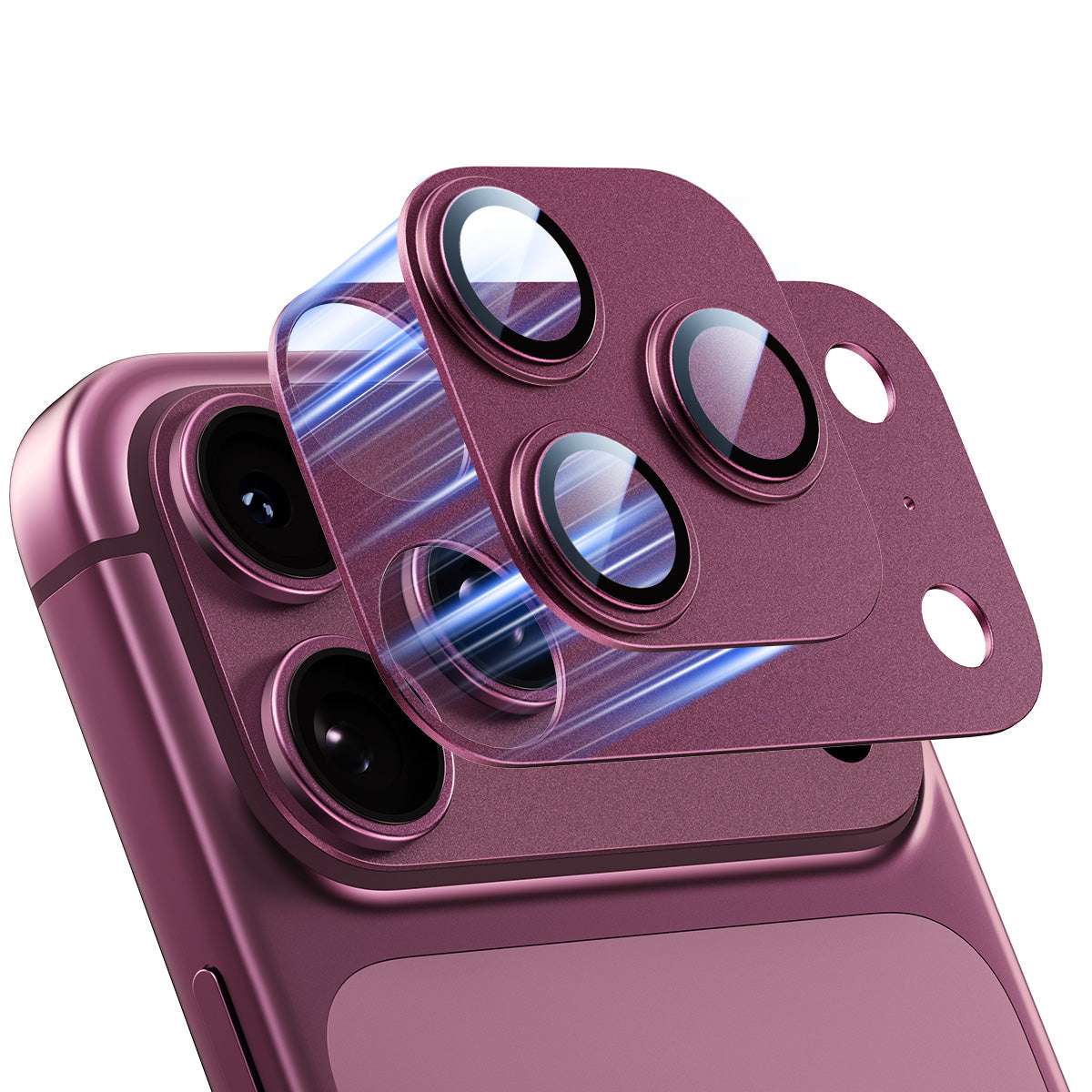
For an anti-reflective screen protector for iPhone 17 Pro Max, confirm the exact model rather than relying on a general “iPhone 17 series” label. Edge shape, sensor coverage, black borders, and case clearance are model-specific.
Which Users Get the Most Value from AR?
| Daily Situation | Likely Value of AR | Why |
|---|---|---|
| Outdoor navigation, delivery work, travel, or field work | High | Bright surroundings repeatedly compete with screen content. |
| Desk beside a window or under strong overhead lighting | Medium to high | Reflections can remain distracting even indoors. |
| Photography or video framing in changing light | Medium to high | Seeing controls and framing clearly can matter more than the lowest price. |
| Mostly evening and softly lit indoor use | Low | There is less bright ambient light for the coating to manage. |
| Protector replaced often because of frequent chips or damage | Low to medium | A recurring AR premium may be hard to justify. |
| Primary concern is side-view privacy | Choose by privacy need | Privacy filtering and anti-reflection solve different problems. |
This table is a decision guide, not a laboratory score. Your result from the 60-second test should carry more weight than a general recommendation.
How to Tell Whether an AR Claim Is Useful
A product page should help you understand what has been measured and what has not. Watch for these common shortcuts:
- “High transparency” is not the same as low reflection. Transmission, reflection, absorption, and scattering describe different optical behavior.
- “Anti-glare” may mean matte. Corning explains that anti-reflective and anti-glare treatments manage light differently. Look for a clear description of the surface.
- A dramatic comparison photo needs matching conditions. Lighting, camera exposure, viewing angle, screen brightness, and displayed content should be the same on both sides.
- AR does not prove durability. Check the base material, edge design, fit, and warranty separately.
- Universal-looking labels can hide fit problems. Confirm the full iPhone model and case compatibility.
If a seller publishes a reflectance or transmittance figure, look for the test method, wavelength range, angle, and comparison surface. A number without conditions is difficult to compare with another product.
Buy It or Skip It?
Buy an AR Protector If:
- Your reflection test shows that glare repeatedly hides useful content.
- You want a clear glass appearance instead of a matte texture.
- You still want an added protective layer over an iPhone with a factory AR surface.
- The product is made for your exact model and works with your case.
Skip the AR Premium If:
- You rarely notice glare during normal use.
- Your main goal is the lowest-cost replaceable scratch barrier.
- You prefer matte texture or need side-view privacy instead.
- The listing uses AR language but provides no clear coating or product information.
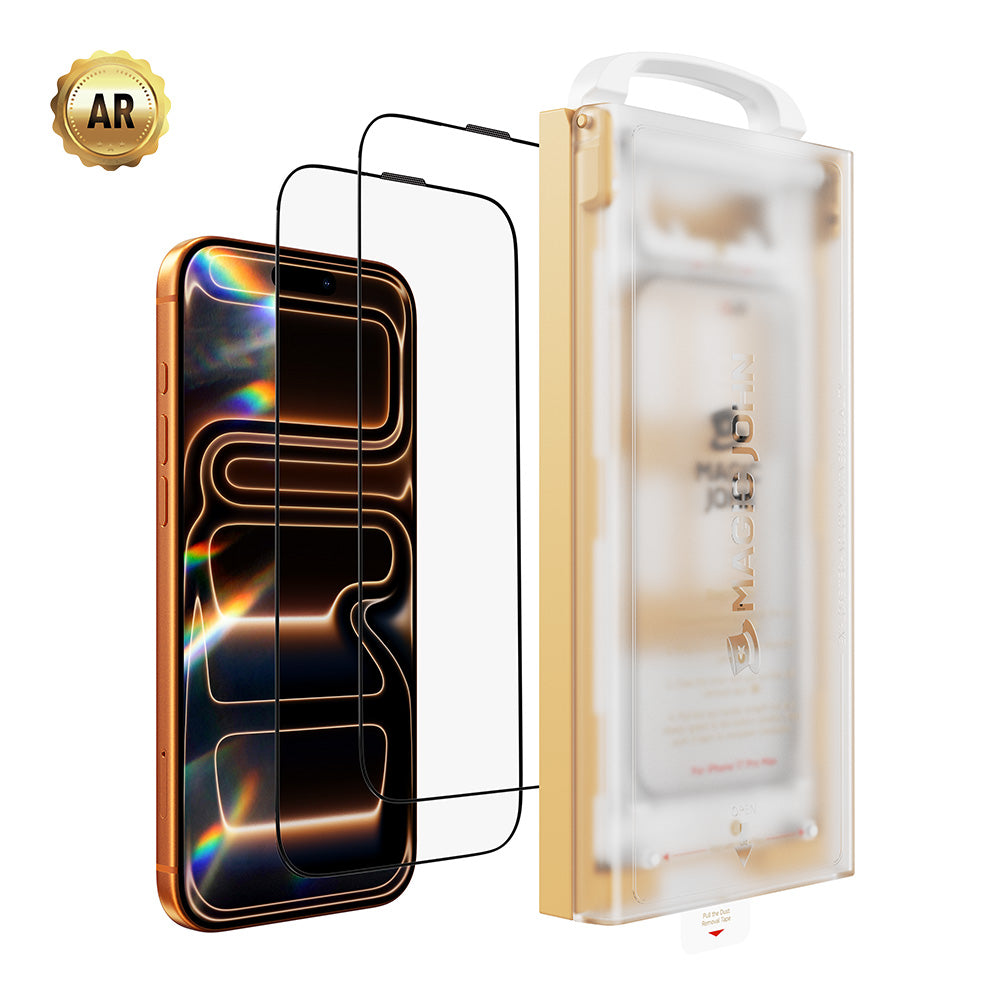
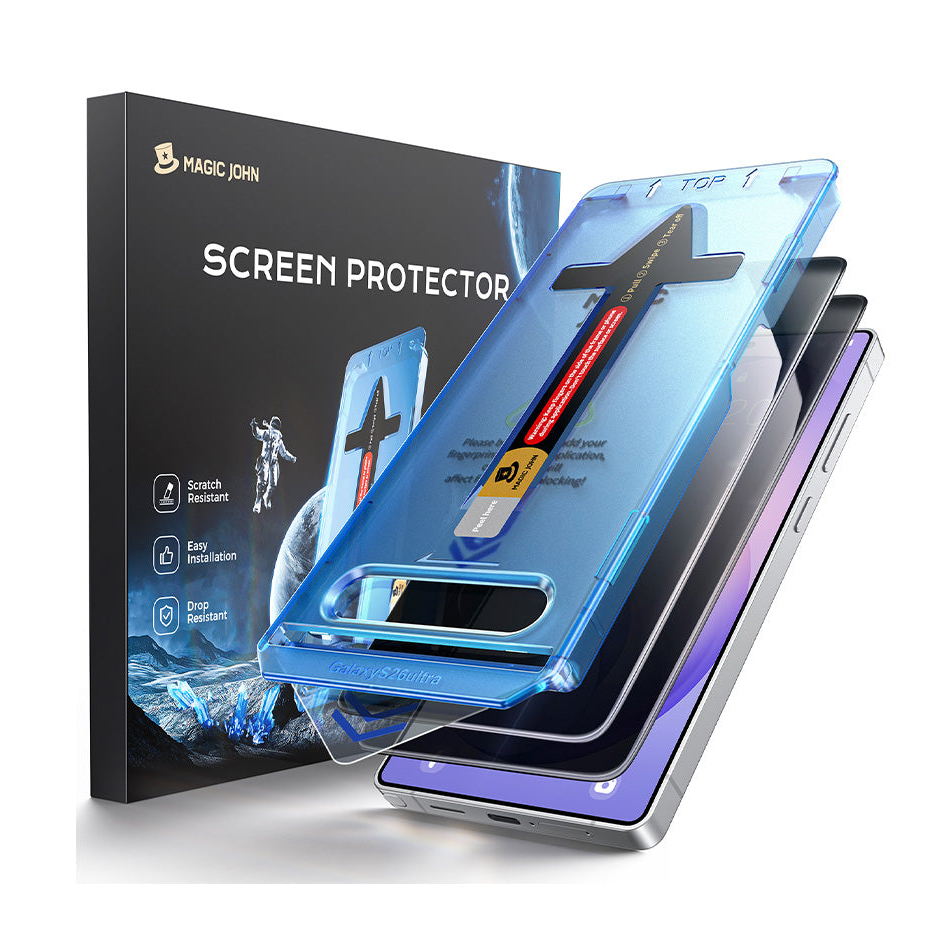
The current MAGIC JOHN screen protector for iPhone 17 Pro and Pro Max is listed as tempered glass with an AR anti-reflection coating, 3D curved edges, case-friendly fit, and an auto-alignment installation frame. It is offered in clear and privacy styles, so check the selected style before ordering.
A simple rule: If glare interrupts a task you perform every day, AR can justify its added cost. If you have to search for a difference, keep the simpler protector and spend the budget where you will notice it.
Frequently Asked Questions
Does an AR screen protector help at night?
Does an AR protector make an iPhone screen brighter?
What does an anti-glare screen protector do?
Do I need AR glass if iPhone 17 already has an anti-reflective coating?
How can I verify an AR screen protector claim?
Can an AR screen protector work with a phone case?



Deja un comentario
Este sitio está protegido por hCaptcha y se aplican la Política de privacidad de hCaptcha y los Términos del servicio.