



Not all screen protectors are the same. Whenever a popular brand draws complaints online, shoppers start asking how to tell a good tempered glass protector from a bad one before they buy. This guide covers what actually matters, what to ignore, and the red flags to watch for, so you can choose with confidence whether you're buying for an iPhone, Samsung Galaxy or Google Pixel.
What a Tempered Glass Protector Does
A tempered glass screen protector is a thin sheet of treated glass that sits on top of your phone's display. Its job is to take scratches and scuffs that would otherwise land on your screen. It can also help in some knocks, because if the protector cracks, the screen underneath may be spared. It's a lot cheaper to replace a protector than a screen.
It has limits. No protector makes a phone unbreakable, and a hard enough drop can still crack the screen or the glass. A good protector is a simple layer of insurance, not a guarantee.

7 Things to Check Before You Buy
- Is it made for your exact model? This is the most important check. The cutouts for the camera, speaker and sensors must match your phone, and the size must be right. A protector for a similar model, such as a standard model instead of the Pro or Ultra, may fit badly or block sensors. Look for the exact model name on the listing.
- Does it work with your sensors? Modern phones have Face ID, ultrasonic fingerprint readers and ambient light sensors. For example, Apple's guidance for the iPhone 18 Pro is that anything covering the TrueDepth camera can cause problems, and it suggests removing privacy protectors if Face ID fails. See our iPhone 18 Pro Face ID guide. If your phone has an under-display fingerprint sensor, pick a protector that says it supports it.
- What does "9H" actually mean? The 9H rating comes from a pencil hardness scale, where 9H is the hardest pencil. It's a useful sign that the surface is hard, but it's not a measure of how a protector survives a drop, and almost every tempered glass protector claims it. Treat it as a minimum, not a reason to pay more.
- Is it clear? A good protector should look like nothing is there. Look for photos or reviews that don't mention haze, rainbow effects or a dull look. If you want privacy, a privacy version will look dark from the side by design, but should still look clean from the front.
- Does it have an oil-resistant coating? An oleophobic coating helps fingerprints wipe off more easily and keeps the screen smooth to touch. Coatings wear down over time, so check reviews for comments about the feel after a few months.
- How does the edge work with a case? Protectors that run all the way to the edge can lift if the case presses on them. We cover this in our guide to screen protector lifting at the edges. Check whether the listing says it's designed to work with cases.
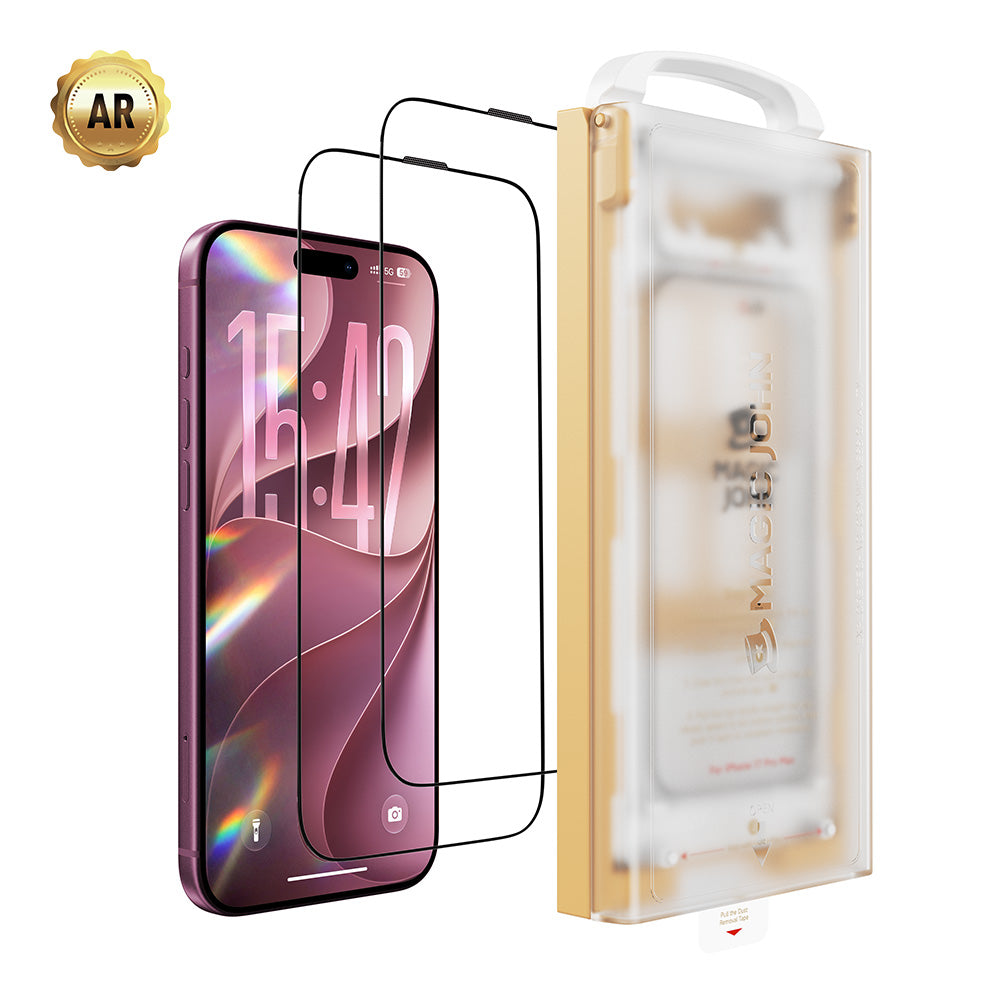
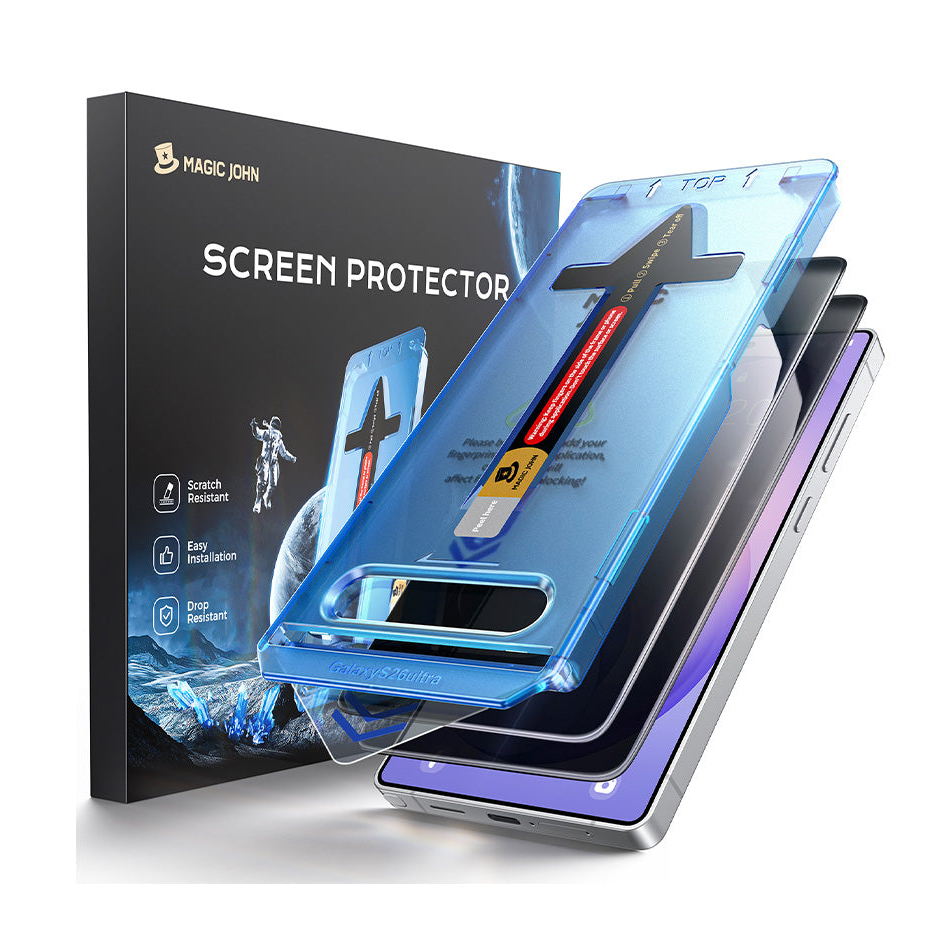
- What happens if something goes wrong? Check the warranty, return policy and what's in the box (installation tools, cleaning wipes, alignment frame). A seller who stands behind the product will say so clearly.

Red Flags to Avoid
- No model listed, or "fits all phones."
- "Unbreakable" or "shatterproof" claims. No protector can promise this.
- Only stock photos and no real installation images.
- A price that's far below everyone else's. It may be fine, but check the reviews and policy carefully.
- No contact details, warranty or return information.
- Reviews that all sound the same or were all posted around the same time.
How to Read Reviews
Reviews are useful, but you need to read them carefully:
- Read the middle ratings. The three- and four-star reviews are often the most specific about fit, bubbles and sensor problems.
- Look for the same complaint repeating. One person with a bubble could be an installation error. Many people reporting the same issue on the same phone is a pattern.
- Check that reviewers own your model. A review for another phone doesn't tell you about yours.
- Sort by newest. Quality can change over time.
- Look for installation photos from real customers.
The same rules apply to any brand, including ours. Read the reviews, check the policy and decide for yourself.
Why Choose Magic John
Magic John was founded in 2021 and makes screen protectors and accessories for iPhone, Samsung Galaxy and Google Pixel. Here's how we measure up against the checklist above:
| What to look for | What we offer |
|---|---|
| Model-specific fit | Protectors are made for specific models. Choose your exact phone on the product page. |
| Choice of finish | HD Clear for maximum clarity, and Privacy for keeping your screen private on supported models. |
| Hardness | 9H tempered glass, made with a 17-step process. |
| Warranty | 180-day warranty with free replacement. |
| Customer reviews | As of October 10, 2026, our site shows 4.34 stars across 8,468 reviews. |
| Help with installation | An installation tutorial so you can apply it correctly. |
| Shipping | Free shipping on orders over $40. |
One honest note for Face ID and ultrasonic fingerprint phones: sensors are sensitive to what sits over them. If you have an iPhone 18 Pro, HD Clear is the safer pick, because Apple advises removing privacy protectors if Face ID has problems. If you have a Galaxy S26 Ultra, Samsung says its built-in Privacy display removes the need for a separate privacy protector. We explain more in our guide to Privacy Display vs privacy screen protectors.
Shop iPhone screen protectors Shop Samsung screen protectors Shop Pixel screen protectors
Installing It Right
Even a great protector can look bad if it's installed badly. A few basics:
- Install in a clean, low-dust spot, such as a bathroom after a hot shower.
- Clean the screen thoroughly with the wipes, then remove any dust with the sticker.
- Align the protector with the cutouts before you press down.
- Press from the center out to push out bubbles.
We recommend watching our installation tutorial before you start.
FAQ
How do I know if a screen protector is good quality?
Check that it's made for your exact model, supports your sensors, looks clear in photos, has a coating for fingerprints, and comes with a clear warranty and return policy. Read reviews from people with your phone.
Does 9H mean a screen protector won't break?
No. 9H refers to surface hardness on a pencil scale. It indicates scratch resistance, not drop protection.
Is a more expensive screen protector better?
Not always. Price can reflect materials and support, but it doesn't guarantee quality. Judge by fit, reviews and the warranty.
Will a screen protector affect Face ID or my fingerprint sensor?
It can if it's the wrong model or isn't installed correctly. Choose one designed for your phone, and see Apple's and Samsung's guidance for your model.
Is tempered glass better than a plastic film?
Tempered glass is harder and feels more like the phone's own screen, while thin films are lighter and can be more flexible. The right one depends on your phone and what you want. Apple Watch, for example, works well with soft film.
How often should I replace my screen protector?
Replace it when it cracks, gets deep scratches, starts to lift at the edges or the coating wears off. Check what your warranty covers.


Hinterlassen Sie einen Kommentar
Diese Website ist durch hCaptcha geschützt und es gelten die allgemeinen Geschäftsbedingungen und Datenschutzbestimmungen von hCaptcha.