



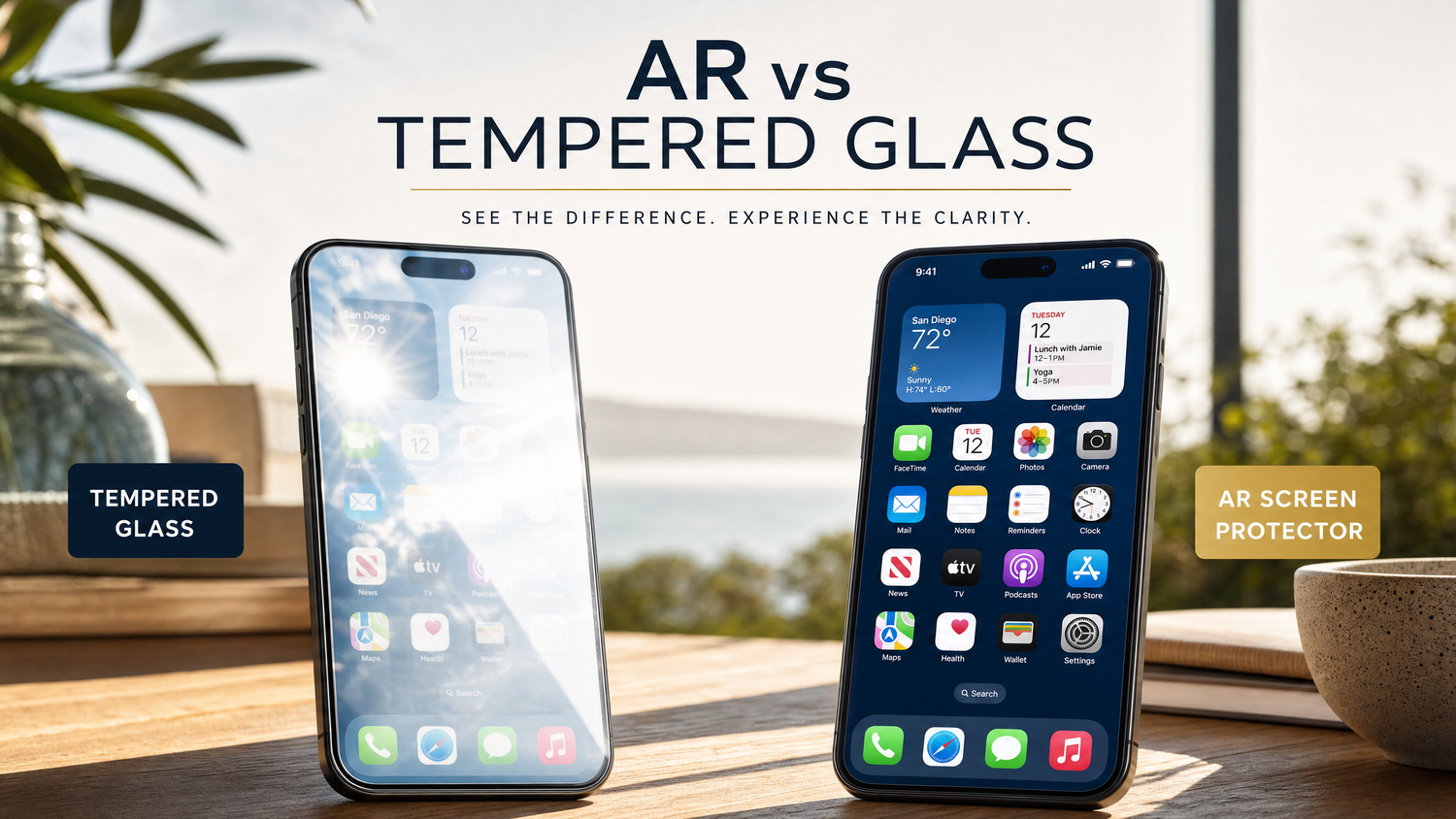
When you drop $1,000 or more on a new iPhone, the first accessory most people buy is a screen protector. But walk into any store—or scroll through Amazon—and you are hit with a wall of options. Two terms keep showing up: AR (anti-reflective) screen protectors and tempered glass screen protectors.
So what is the real difference? Is AR just marketing, or does it actually do something? And more importantly, which one makes sense for how you actually use your phone?
This guide breaks down how each technology works, where each one wins and loses, and how to choose the right protection for your iPhone without overspending on features you will not notice.
What Is a Tempered Glass Screen Protector?
Tempered glass screen protectors are the most common type of phone screen protection. They are made by heating standard glass to around 620°C (1,148°F) and then rapidly cooling it in a process called thermal tempering. According to Corning, the maker of Gorilla Glass, this process creates glass that is stronger and less likely to shatter into sharp pieces than untreated glass.
The key numbers you will see on most tempered glass protectors are:
- 9H hardness rating: Resists scratches from everyday items like keys and coins
- 0.3 mm thickness: Standard trade-off between durability and touch sensitivity
- Oleophobic coating: Repels fingerprints and smudges
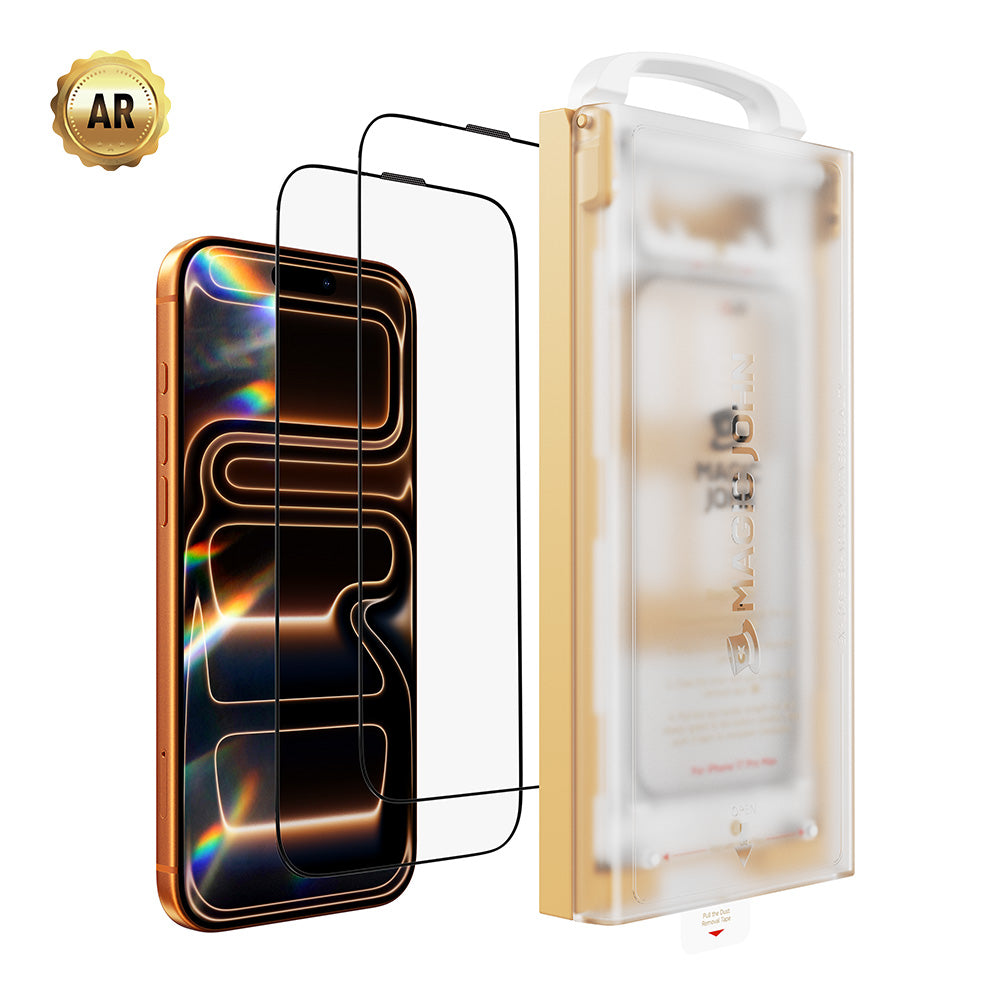
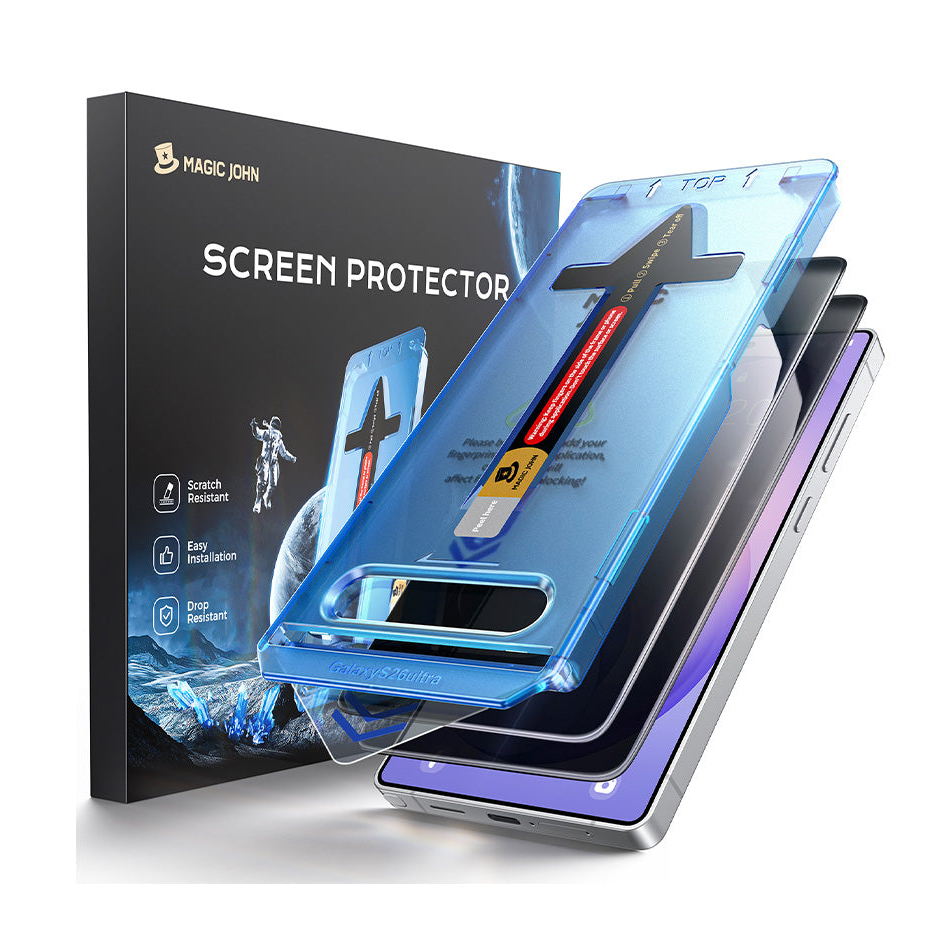
Brands like Magic John sell tempered glass options that also include auto-alignment trays and dust-free installation. That convenience matters because the biggest reason screen protectors fail is not the glass—it is dust trapped underneath during installation.
- Strong scratch and impact resistance
- Smooth, glass-like feel under your finger
- Generally cheaper than AR glass
- Widely available for almost every iPhone model
- Reflects more ambient light, especially outdoors
- Fingerprints and smudges show up quickly without a good oleophobic coating
- Thick glass can reduce touch sensitivity on some devices
What Is an AR Screen Protector?

AR stands for anti-reflective. An AR screen protector is usually still made of tempered glass, but it adds extra optical coatings to the surface. These coatings are designed to reduce glare and improve screen clarity in bright environments.
The most common way manufacturers do this is through vacuum-deposited optical coatings, sometimes called magnetron sputtering. In simple terms, ultra-thin layers of material are applied to the glass surface to scatter or cancel out reflected light. This is the same basic technology used in prescription anti-glare glasses, camera lenses, and high-end displays.
According to Screen Guard Factory, an AR screen protector combines the protection of traditional tempered glass with reduced ambient light reflection.
How Much Glare Does AR Actually Reduce?
This is where things get interesting. Good AR coatings can reduce surface reflections from about 8% to under 1% under ideal conditions. In real-world use, that means:
- Less squinting when reading your phone in direct sunlight
- Better contrast when watching videos near windows
- Reduced eye strain during long sessions
That said, the benefit depends heavily on the quality of the coating. A cheap AR protector may only offer a small improvement over standard tempered glass.
- Reduced glare in bright light and outdoor use
- Better screen visibility without maxing out brightness
- Lower brightness usage can help battery life
- Still provides tempered glass-level scratch protection
- Usually more expensive than standard tempered glass
- Lower-quality versions can have a rainbow effect or hazy look
- Oleophobic coatings may wear down faster depending on brand
- Benefit is smaller indoors or in low-light settings
Direct Comparison: AR vs. Tempered Glass
| Feature | AR Screen Protector | Tempered Glass |
|---|---|---|
| Scratch protection | Yes, 9H rated | Yes, 9H rated |
| Glare reduction | Significant in bright light | Minimal |
| Outdoor visibility | Better | Average |
| Indoor clarity | Good to very good | Very good |
| Fingerprint resistance | Depends on coating | Depends on coating |
| Price | Higher | Lower |
| Best for | Outdoor users, travelers, content viewers | General daily use, budget buyers |
The biggest practical difference is not protection. It is visibility.
If you mostly use your iPhone indoors, in the office, at home, or in the car, a standard tempered glass protector will probably serve you well. If you regularly use your phone outside, on hikes, at the beach, or for navigation while driving, the glare reduction from an AR protector can be genuinely useful.
Who Should Buy AR vs. Tempered Glass?
Who Should Buy AR?
AR screen protectors make the most sense for:
- Outdoor workers and travelers who use their phone in sunlight
- Content creators and photographers who need to see the screen accurately in different lighting
- Drivers using navigation apps who deal with sun glare on the windshield
- Anyone who finds themselves maxing out brightness frequently
Who Should Stick with Tempered Glass?
Standard tempered glass is the better choice for:
- Most everyday users who want reliable protection at a lower cost
- People who mostly use their phone indoors
- Budget-conscious buyers who still want 9H protection
- Users who replace screen protectors often and want lower ongoing cost
Does AR Affect Touch Sensitivity or Face ID?
A common question is whether AR coatings interfere with Face ID or touch response.
The short answer: no, not if the protector is well-made. High-quality AR screen protectors are thin enough and optically clear enough that Face ID, Touch ID where applicable, and normal touch input work without issue.
However, thickness matters. Some budget AR protectors add extra layers that can reduce responsiveness or create a slight rainbow effect at certain angles. This is usually a sign of lower-quality coating rather than a flaw in AR technology itself.
Installation Matters More Than the Label
Here is an honest truth: a premium AR screen protector installed poorly will look worse than a mid-range tempered glass protector installed cleanly.
Dust, bubbles, and misalignment are the real enemies. This is why many users prefer brands that include installation tools like alignment frames, dust-removal stickers, and one-touch applicators. Magic John's Gen 3 screen protectors, for example, use a dust-free installation system designed to reduce the most common installation failure points.
If you have never installed a screen protector before, it is worth buying a pack with an alignment tool rather than trying to eyeball it.
How to Choose for Your iPhone
If you are shopping right now, here is a simple decision tree:
Pairing Your Screen Protector With Other Accessories
A screen protector protects the display, but it is only one part of keeping your iPhone in good condition. Most users should also consider:
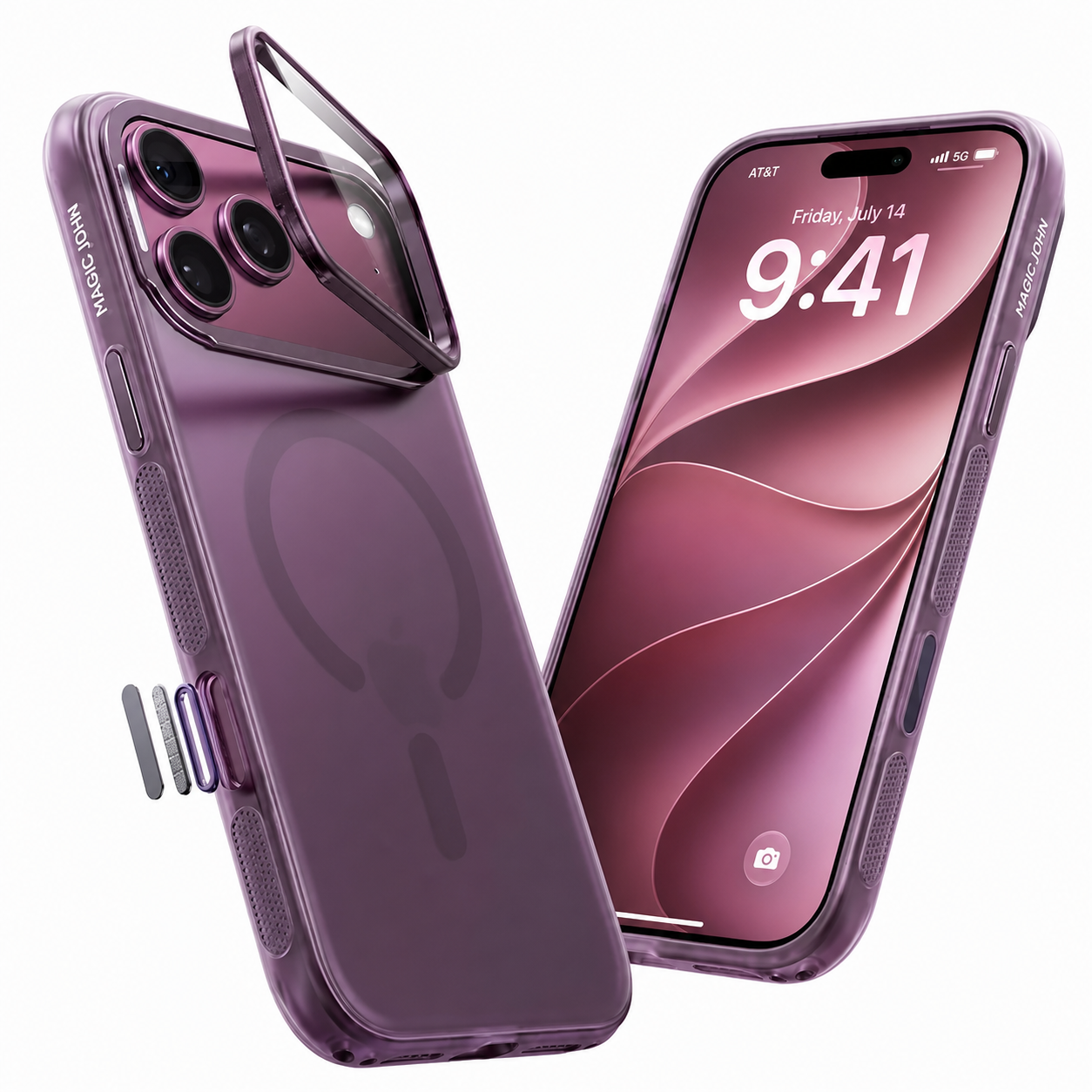
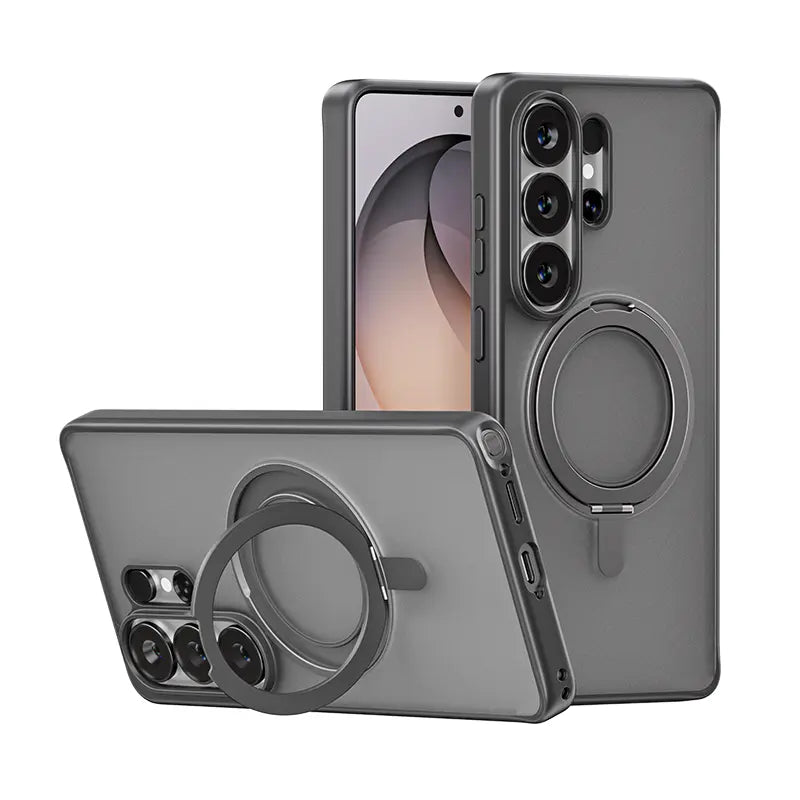
- A phone case for drop and corner protection. Magic John offers phone cases with MagSafe and kickstand options that work alongside screen protectors without lifting the edges.
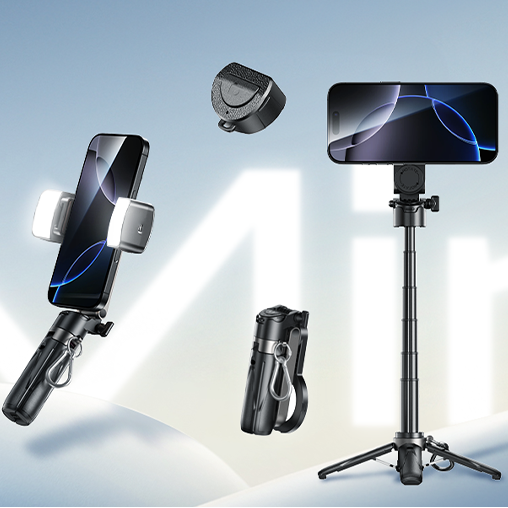
- A phone stand or selfie stick if you use your phone for video calls, content creation, or travel photography. A stable grip or extendable selfie stick makes it easier to frame shots without constantly handling the device, which reduces the chance of drops.
The goal is not to buy every accessory. It is to match your protection to your actual daily use.
Frequently Asked Questions
Is AR screen protector the same as anti-glare or matte screen protector?
Will an AR screen protector make my screen look blurry?
Does AR glass provide the same drop protection as tempered glass?
Can I use a phone case with an AR screen protector?
Is an AR screen protector worth the extra cost?
How long does the anti-reflective coating last?


コメントを書く
このサイトはhCaptchaによって保護されており、hCaptchaプライバシーポリシーおよび利用規約が適用されます。