




You put on a fresh screen protector, snap your case back on, and everything looks perfect. Then a few days later, one corner starts lifting. A week after that, dust gets under the edge and it only gets worse. The fix isn't complicated, but it does require knowing why it happens in the first place, and choosing the right screen protector for the way you actually use your phone.
Why Your Screen Protector Keeps Lifting at the Edges
Almost always one of these three reasons:
- Wrong cut. The protector is sized for caseless use. The case rim presses directly on the edge and pushes it up.
- Off-center install. Even 0.5mm off means one side sits flush against the case rim instead of clearing it.
- Repeated friction. Every time you snap the case on or off, the rim rubs the protector edge and slowly breaks the bond.
All three come back to the same root cause: the protector and case are not designed to share space.
Edge-to-Edge vs Case-Friendly Screen Protectors
Both terms refer to tempered glass screen protectors, but the cut size is different, and that difference determines how they behave with a case.
| Feature | Edge-to-Edge Protector | Case-Friendly Protector |
| Coverage area | Full screen, corner to corner | Approx. 0.5mm inset from screen edge |
| Best for | Caseless use | Pairing with a phone case |
| Lifting risk with a case | High | Low |
| Screen edge exposure | None | Minimal |
| Visual appearance | Seamless | Nearly identical |
The inset on a case-friendly protector is intentional. It creates a small clearance zone so the case lip has nothing to press against. The exposed strip at the perimeter is narrow enough that it adds no meaningful scratch risk to that area.
An edge-to-edge protector on a cased phone will almost always lift eventually, regardless of brand or price. The cut simply doesn't leave room for a case rim.
How to Stop Your Case from Pushing Up the Screen Protector
Even with the right protector, installation and case choice still matter. Here's what to check.
Choose the Correct Cut
Confirm the protector is labeled case-friendly before you buy. Look for terms like "case-friendly fit" or "recessed edges" in the product description. If the listing only says "edge-to-edge," it's not designed for case use.
Some listings use "full coverage" as a selling point without clarifying case compatibility. Full coverage and case-friendly are not the same thing. Full coverage means the glass covers the entire display. Case-friendly means the glass is cut with enough inset to clear a case rim.
Get the Alignment Right
The clearance between a case-friendly protector and the screen edge is only about 0.5mm per side. If the protector lands even slightly off-center, that gap disappears on one side and the case starts pushing up the edge.
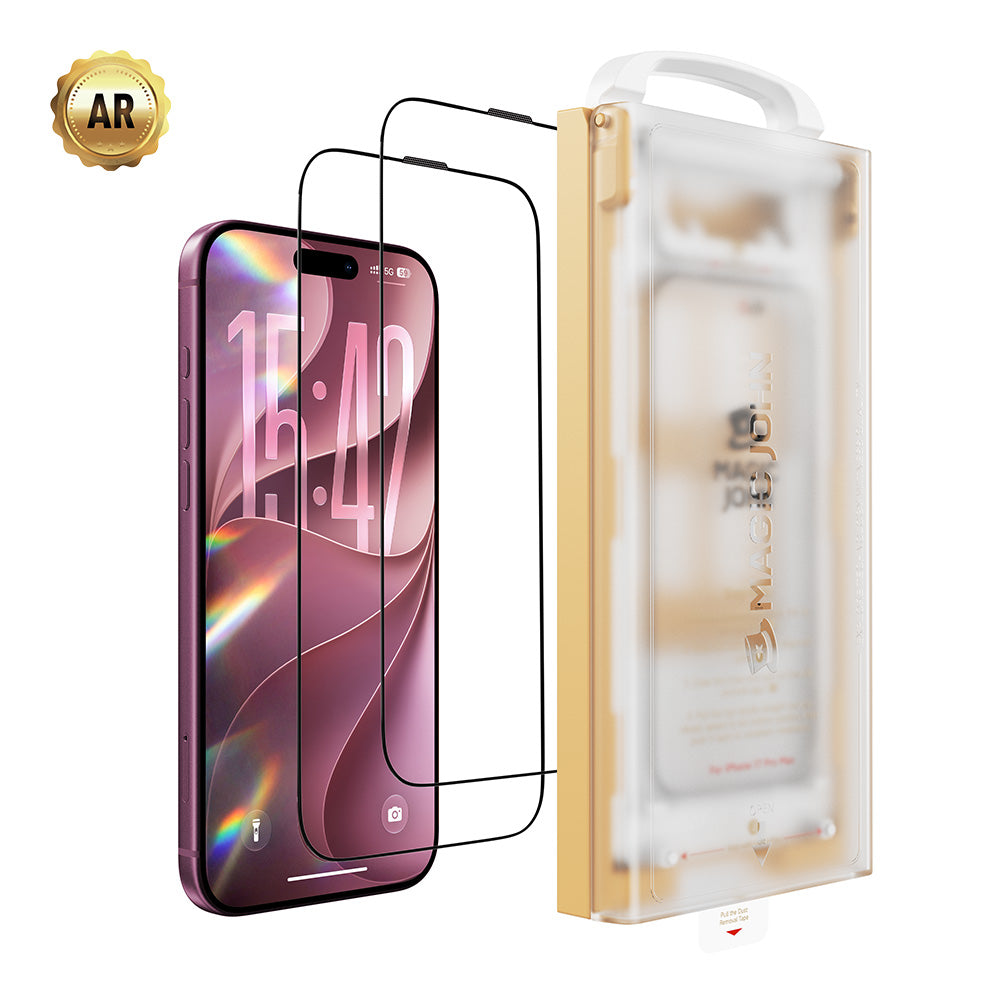
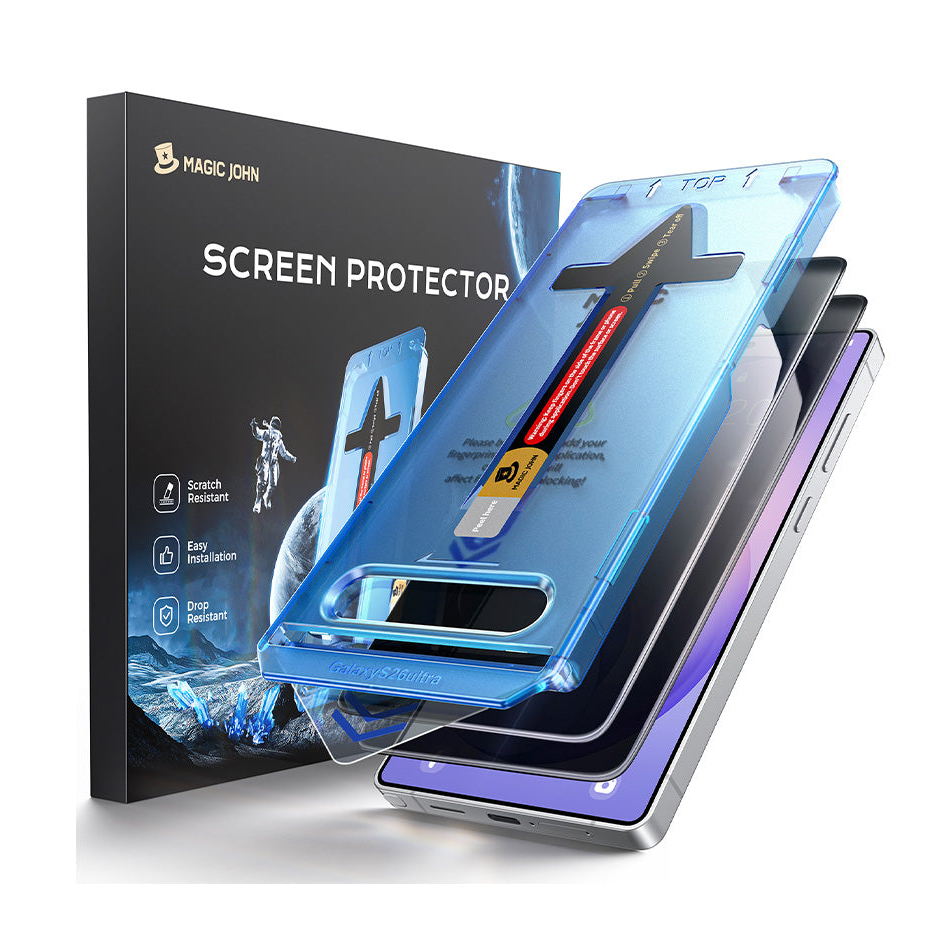
An applicator tray solves this. It holds the protector in position and drops it onto the screen in one motion. MAGIC JOHN's screen protectors include a self-aligning applicator that also removes dust before the glass lands, so the two most common installation problems are handled at once.
Consider Your Case's Lip Height
Cases with a thick, raised inner lip press harder against the protector edge. If your current case keeps lifting the protector, check for actual contact between the case rim and protector edge. A protector with a slightly larger inset clearance will often resolve it.
Press the Edges After Installation
Once the protector is on and the case is back, press firmly along all four edges with your thumb for a few seconds each. This helps the adhesive fully bond along the border before long-term pressure from the case sets in. Skipping this step is one reason edges start lifting within the first week.
What to Check Before You Buy a Screen Protector for Case Use
Not every product listing is clear about compatibility. Two protectors that look identical in photos can behave very differently with a case. Before purchasing, check these three things.
Cut Size
Look for explicit case-friendly labeling or a stated inset dimension. Listings that only say "full coverage" or "edge-to-edge" without mentioning cases are worth verifying before you commit.
Adhesive Coverage
Some protectors only apply adhesive at the center, leaving dry edges. They hold fine without a case but lift quickly under case pressure. Full-surface adhesive holds much better under lateral pressure from a case rim, and keeps the edges bonded even when the case snaps on and off regularly.
Thickness
Protectors 0.4mm and above create a taller edge that cases are more likely to catch. A 0.2mm to 0.3mm tempered glass protector sits lower against the screen and clears most case lip heights without contact.
MAGIC JOHN Screen Protectors and Cases Built to Work Together
When a screen protector and case are developed around the same device dimensions, compatibility doesn't require any guesswork.
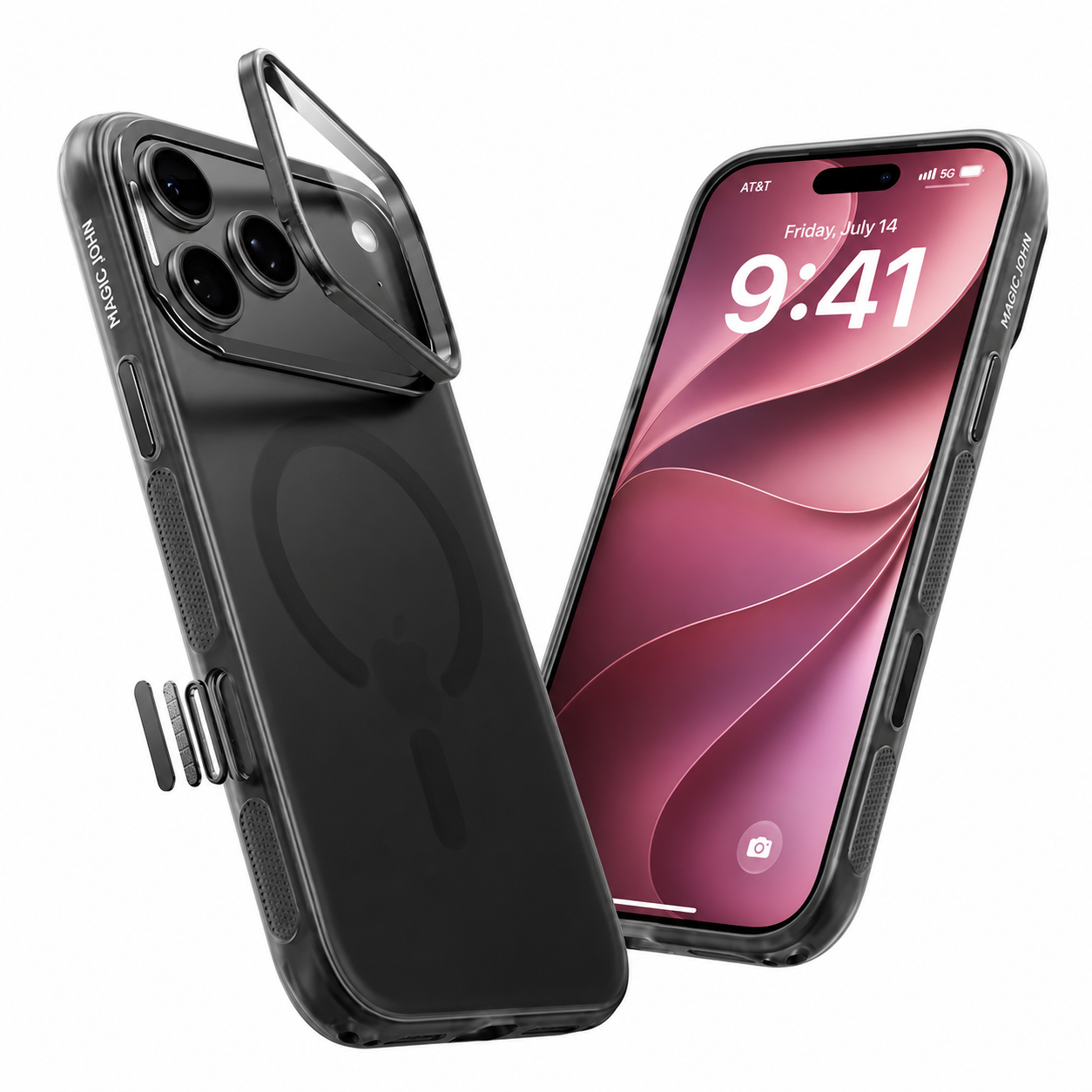
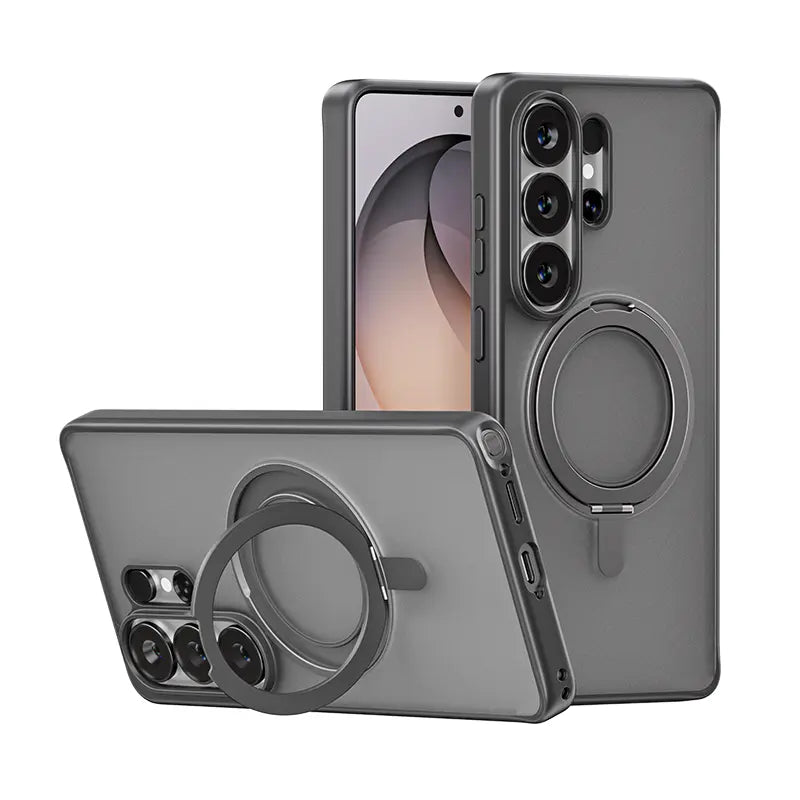
MAGIC JOHN's iPhone screen protectors and cases are designed with matching tolerances. The protectors use a case-friendly cut with full-surface adhesive. The cases have a lip height that clears the protector edge cleanly. The two components fit together precisely from day one, with no adjustment needed.

The protectors go through a 17-step process with S-Class Vacuum Plating, keeping the glass at a consistent 0.33mm thickness. That sits below most case lip heights and avoids the pressure-point contact that causes lifting over time.
Stop the Lift for Good
Peeling edges almost always trace back to a protector that wasn't cut for case use, or an install that placed it too close to the case rim. Fix the cut, nail the alignment, and the two stay flat together. If you'd rather start with a protector and case that are already matched, you can find MAGIC JOHN's iPhone screen protectors and cases at MAGIC JOHN.
Frequently Asked Questions
Q1: Can I Reuse a Screen Protector After It Starts Lifting?
Not reliably. The adhesive is designed for a single application. Once lifted, especially if dust got underneath, the bond won't fully restore. Pressing it back down may hold short-term, but lifting usually returns. Replacement is the more reliable option.
Q2: Does a Case-Friendly Screen Protector Leave My Screen Edges Unprotected?
The exposed area is minimal, typically 0.5mm around the perimeter. Scratches to the very edge of a phone screen are rare. The flat display area, which the protector fully covers, is where almost all screen damage occurs.
Q3: Will a Thicker Phone Case Make the Lifting Problem Worse?
Yes, it can. Cases with a thicker, more rigid inner lip apply more pressure on the protector edge. Soft silicone cases with a thin lip tend to cause less lifting than hard polycarbonate cases with a pronounced rim. If you use a thick rugged case, look for a protector with a larger inset clearance.
Q4: How Long Should a Screen Protector Last Before It Starts Peeling?
A well-installed, case-compatible protector should last 12 to 18 months with normal use. Lifting before the 3-month mark usually points to an installation or fit issue. Heat, humidity, and frequent case removal can all shorten adhesive life.
Q5: Does Temperature Affect Screen Protector Adhesion?
Yes. Prolonged heat, like leaving your phone in a hot car, can soften the adhesive and cause edges to lift. Cold makes the adhesive less flexible and more prone to corner peeling. Room temperature (65°F to 75°F / 18°C to 24°C) is the best condition for installation.


Leave a comment
This site is protected by hCaptcha and the hCaptcha Privacy Policy and Terms of Service apply.